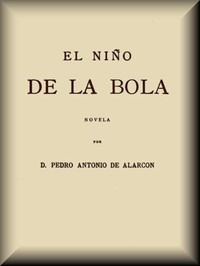
El Niño de la Bola: Novela by Pedro Antonio de Alarcón

(10 User reviews)   3095
Alarcón, Pedro Antonio de, 1833-1891 Alarcón, Pedro Antonio de, 1833-1891
Spanish
If you love a story that feels like a classic black-and-white movie, you have to try 'El Niño de la Bola.' It's not just a romance—it's a tense, emotional drama set in 19th-century Spain. The main character, Manuel, returns home after years away, only to find the woman he's always loved is about to marry another man. The title, which means 'The Boy with the Ball,' refers to a strange prophecy from his childhood that seems to be coming true. It’s a gripping mix of fate, passion, and the question of whether we can ever really escape our past. I couldn’t put it down!
Share

Read "El Niño de la Bola: Novela by Pedro Antonio de Alarcón" Online

This book is available in the public domain. Start reading the digital edition below.

START READING FULL BOOK
Instant Access    Mobile Friendly

Book Preview

A short preview of the book’s content is shown below to give you an idea of its style and themes.

transparencia de la atmósfera hácia la parte de la Capital... Era que venía el Hombre. Y, pues que el Hombre, el rey de la Creacion, solia pasar por allí dando el mal ejemplo de temer á sus prójimos, nada tuvo de particular ni de ofensivo que los humildes irracionales se apresurasen, como todos los dias, á evitar su real presencia. II. NUESTRO HÉROE. Aquella nube de polvo traia en su seno á un arrogante jinete, seguido de un arriero á pié y de tres soberbias mulas cargadas de equipaje. El caballero, á juzgar por su figura y vestimenta y por el abigarrado aspecto de las tales cargas, parecia juntamente un feriante, un contrabandista y un indiano. Tambien hubiera sido fácil suponerlo un capitan de bandidos de primera clase, que regresara á su guarida con el rico botín de alguna afortunada empresa. Érase un jóven como de veintisiete años; fino y elegante, aunque vestía de chaqueta (traje usado entónces en Andalucía por personas muy principales), y tan airoso, nervudo y bien formado, que habria podido servir de modelo para la famosa estatua del _Gladiador combatiente_. La mencionada chaqueta, así como el chaleco y el pantalon (ó más bien calzon de montar) que llevaba, eran de punto azul muy ceñido al cuerpo, y concluia por abajo su equipo en unos botines ó polainas de gamuza gris, con sendas espuelas de plata labrada, dignas éstas de un Capitan General. Gruesos botones de muletilla, tambien de plata, orlaban hasta cerca del codo las boca-mangas de la chaqueta y servian de botonadura al chaleco. Un pañuelo negro de crespon, anudado á la marinera, le servia de corbata, y negro era asimismo el rico ceñidor de seda china que ajustaba á modo de faja su esbelta cintura. En los puños y cuello de la camisa lucía costosos brillantes; pero ninguno de tanto valor como el que radiaba en el dedo meñique de su mano izquierda. Finalmente, el sombrero (que en aquel momento se acababa de quitar) era de finísima paja de color de café, ancho de alas y muy alto y puntiagudo, como los usan muchas gentes de América y de las Dos Sicilias,--á cuya forma se da en Granada el pintoresco nombre de «_sombrero de catite_.» Tan singular personaje (á quien sentaba perfectamente aquel raro atavío semi-andaluz, semi-exótico) llamaba la atencion, más que por todo lo dicho, por la varonil hermosura de su cara. Que ésta habria sido de extraordinaria blancura, indicábalo aún aquella parte de su despejada y altiva frente que el sombrero solia proteger; pero, en lo demas, habíala quemado el sol por tal extremo, que su palidez marmórea habia adquirido un tinte como de oro mate, cuyo tono igual y sosegado no carecia de hechizo. Eran negros y muy rasgados y grandes sus africanos ojos, medio dormidos á la sombra de largas pestañas; mas, cuando súbitamente los abria del todo, excitado por cualquier idea ó caso repentino, salia de ellos tanta luz, tanto fuego, tanta energía vital, que su mirada no podia soportarse. Esta mirada reunia á un mismo tiempo la temible majestad de la del leon, la fijeza de la del águila y la inocencia de la del niño; sólo que era más triste que la del último, y más tierna en ocasiones que la de los citados reyes de las selvas y de los aires.--Su abundante cabello, negro tambien y muy cortado por detras, orlaba ámpliamente la parte superior de la cabeza, semejando una rizada pluma tendida del lado izquierdo al derecho; lo cual daba mayor realce á aquella fogosa fisonomía. Completaban su peregrina belleza un perfil intachable, sirio más...

This is a limited preview. Download the book to read the full content.

First published in 1880, Pedro Antonio de Alarcón's novel is a classic of Spanish literature that reads with the urgency of a modern drama. It's a story about love, destiny, and the heavy weight of the past.

The Story

The plot follows Manuel Venegas, a man who returns to his hometown in Granada after a long absence. He's driven by one thing: his enduring love for a woman named Soledad. The problem? Soledad is engaged to be married to his rival, a wealthy man named Luis. The tension builds from the moment Manuel arrives. The title comes from a childhood nickname and a local superstition that predicted a tragic fate for 'the boy with the ball.' As the wedding day approaches, this old prophecy starts to feel less like a story and more like a frightening possibility, pushing all the characters toward a dramatic and inevitable clash.

Why You Should Read It

Alarcón is a master of setting a mood. He makes you feel the heat of Andalusia and the claustrophobic pressure of small-town gossip. Manuel isn't a perfect hero—he's impulsive and haunted—which makes his struggle so compelling. The book asks big questions about whether we make our own choices or if our lives are already written, but it never feels like a philosophy lecture. It feels like watching good people head toward a train wreck, hoping against hope they'll find a way out.

Final Verdict

This is a perfect pick for readers who enjoy classic stories with strong emotions and a tight, suspenseful plot. If you liked the doomed romance of 'Wuthering Heights' or the tense atmosphere of a Greek tragedy, but set in a vividly painted Spanish world, you'll be hooked. It’s a relatively short novel, but it packs a powerful punch.


ℹ️ Legal Disclaimer

Legal analysis indicates this work is in the public domain. Enjoy reading and sharing without restrictions.

Joshua Harris
5 months ago

This book was worth my time since the content flows smoothly from one chapter to the next. I would gladly recommend this title.

Ashley Jackson
2 years ago

Recommended.

Mason Thompson
1 year ago

This book was worth my time since the flow of the text seems very fluid. I couldn't put it down.

Michelle Jackson
1 year ago

Amazing book.

Mason Ramirez
1 year ago

Not bad at all.

5
5 out of 5 (10 User reviews )

Add a Review

Your Rating *
There are no comments for this eBook.
You must log in to post a comment.
Log in


Related eBooks