
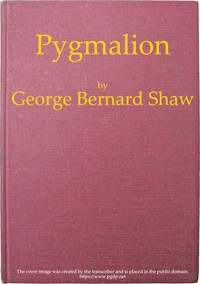
Pygmalion by Bernard Shaw
Read "Pygmalion by Bernard Shaw" Online
This book is available in the public domain. Start reading the digital edition below.
START READING FULL BOOKBook Preview
A short preview of the book’s content is shown below to give you an idea of its style and themes.
Okay, let's set the scene: London, early 1900s. A brilliant but insufferably arrogant linguist, Henry Higgins, makes a boastful bet with his friend Colonel Pickering. He claims he can take a poor flower girl with a strong Cockney accent, Eliza Doolittle, and teach her to speak and act like a proper lady. He’s so confident, he’ll even pass her off as a duchess at a high-society ball. What follows is a grueling, often hilarious training montage of vowel sounds and etiquette. Against the odds, Eliza succeeds spectacularly at the ball. But then the story gets really interesting.
The Story
The plot kicks off with Higgins winning his bet, but Shaw doesn't end it there. That's where most adaptations stop, but the play's real power is in the aftermath. Higgins treats the whole thing as a solved puzzle, ready to toss Eliza aside. But Eliza isn't a puppet; she's a person who has been fundamentally changed. She has the manners and speech of a lady, but no money, no place in society, and no idea who she is anymore. The final act is a fiery, brilliant confrontation where Eliza finds her voice—her real voice—and demands to know what is to become of her. It's less of a neat ending and more of a challenging question left hanging in the air.
Why You Should Read It
First, it's incredibly funny. Higgins is a magnificent, rude, larger-than-life character, and Eliza's father, Alfred Doolittle, is a comic masterpiece of a philosopher-scoundrel. But under the wit, Shaw is digging into big ideas that still hit home. This is a story about the power of language as a social passport, and the cruelty of treating people like projects. It’s about class, yes, but also about agency and self-respect. Eliza’s journey from a thing to be molded into a woman demanding respect is thrilling. Shaw also includes a fantastic preface and lengthy ending notes that argue his points directly—don't skip them! They're like getting bonus commentary from the author.
Final Verdict
This is a perfect book for anyone who loves clever dialogue, strong characters, and stories that make you laugh and think in equal measure. If you enjoyed My Fair Lady, you owe it to yourself to read the source material—it’s sharper and more provocative. It’s also great for readers interested in social issues, feminism, or just a really well-constructed argument wrapped in a brilliant play. A true classic that doesn't feel dusty for a second.
This digital edition is based on a public domain text. It is now common property for all to enjoy.
Emma King
1 year agoI started reading out of curiosity and the pacing is just right, keeping you engaged. Definitely a 5-star read.
George Walker
3 months agoSimply put, the clarity of the writing makes this accessible. Thanks for sharing this review.
Daniel Lewis
11 months agoI have to admit, it provides a comprehensive overview perfect for everyone. Worth every second.
Mason Lopez
1 year agoI had low expectations initially, however the clarity of the writing makes this accessible. Absolutely essential reading.


Emily Robinson
11 months agoUsed this for my thesis, incredibly useful.