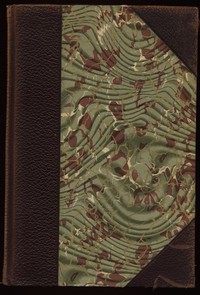

Believe You Me! — A Reader’s Guide
Edition facts
Before opening Believe You Me! — A Reader’s Guide, the edition data offers a quick orientation: 65,125 words, 4 hr 44 min estimated reading time, and 6 detected text sections.
The text analysis averages about 20.0 words per sentence, while the detected sections provide another way to judge how the source is divided.
Project Gutenberg metadata also associates the work with “Humorous stories,” connecting these edition facts with the source record’s subject description.
Calculated from edition completeness, EPUB availability, text structure and catalogue metadata. Not a user rating.
How this score is calculated
- Description quality20 pts
- Title & short description10 pts
- Source metadata20 pts
- Text length15 pts
- Chapters / structure15 pts
- EPUB file integrity20 pts
Total of 100 points, scaled to a 2.5-5.0 range. Editions with an empty description or a missing EPUB file are not scored.
Read the Text
Hoffman was kidding each other and that alligator something fierce.
Now Jim took a hate on this Von Hoffman bird the minute he laid eyes on him, partly on account of the costume of Ruby, and also on general principles, because of the bird's accent. But, the alligator not moving or nothing, Jim asks if the alligator understands only German.
"In all probability," says Von Hoffman; "he is a high-class alligator."
"Then he ought to understand American," says Jim. "He'll have to eventually; why not now?
"There's nothing to prove that," says the German bird with a sneer. "He will probably get along very well as he is, with German only."
Jim looked mad as a hatter; but instead of taking it out on this Von Hoffman, as he had ought to have, he turned on that poor dumb beast.
"Well," says Jim to the alligator, "here's where you learn some patriotism."
And he leaned 'way across the table until his face was only an inch or two away from the alligator's. Jim looked that animal straight in the eye and spoke very severe.
"To hell with Germany!" says Jim.
And with that the alligator snapped--snapped right onto the end of Jim's nose! Oh, my Gawd, but I yelled! So did Jim--believe you me! And then we all tried to get that fiend of a pro-German alligator off Jim's face. When they succeeded in making him let go you had ought to of seen Jim's nose! It had four holes in it and was bleeding something fierce.
Oh, may I never live to see such a sight again, let alone having to go through what followed! For once I forgot my refinement completely, and I remember yelling at Jim to kill that German. For if he didn't sick his alligator onto Jim, who did? And there he stood laughing at Jim for all he was worth; and Jim never offered to fight him!
Believe you me, all my sympathy for Jim melted right away when I seen he wasn't doing nothing but stand there holding on to his nose and moaning.
"I know alligator bites is deadly poison!" He kept saying it over and over again, while Von Hoffman was laughing himself sick.
"I hope it is poison!" he says. "I hope it is, you jackanapes of an American dancer!"
At this I walked right up to that Von Hoffman bird.
"I'll get you for this!" I says. "Somehow I know you're a wrong one, and _I'll_ get you, even if Jim don't want to! I'd enlist to-morrow if I was a man and get your old Kaiser as well!"
Then, the next thing I knew, me and Jim was in the limousine, on the way to the hospital; and Jim was still moaning over being poisoned by the alligator and getting blood all over the place, and the car just relined and everything! I didn't say a word just then, because, of course, you must stick to a pal in time of immediate trouble--do you get me? But I was boiling mad inside, though worried a little about the poison. Still, Jim's not hitting that bird, Von Hoffman, was worse to me than death itself.
At the hospital the chauffeur and me got Jim inside somehow and to a desk in the hall. There was a snappy-looking nurse sitting there with a book, and our coming in at that hour no more worried her than a fly in cold weather. She just looked up quiet and spoke--sort of unhospitable.
"Name of ailment?" she inquired.
"Alligator bite!" I told her, brief; and I will say this got her goat a little, because she made me say it twice more before she would believe me.
Then she directed us down a long hall, and a young guy in a summer suit of white duck stopped reading the newspaper long enough to give Jim's nose the once over.
"No cause for alarm," says this bird. "The nose will be about twice its normal size for a day, that's all!" All! And, as if that wasn't enough, he painted the nose and all round it with some brown stuff, which stopped the bleeding but made Jim look like he was made up for some sort of comedy act. Jim was perfectly sober by then and quit talking about poison, and etc., and when he was back in the limousine I just let myself go and bawled him out good and plenty.
"Now see here, Jim," I says, "I've stuck by you to-night long enough to make sure you ain't goin' to die or nothin'; and now I'm through!"
"You been just fine, Mary," says Jim, trying to take my hand. I took it away quick.
"You don't get me!" I says. "I mean I'm through for keeps. The engagement is broken, and everything!"
"Whatter yer mean--broken?" says Jim, sort of dazed.
"Just that!" I snapped. "Here you get tight and take a insult from a German; and, as if that wasn't enough, you go farther and get bit by a pro-German alligator! And you don't even offer to fight the German who owns the alligator, either! And, what's furthermore, you've got your face swoll up so's you won't be able to dance to-morrow night; and that iodine won't wash off; and the act is crabbed in the bud--do you get me? Crabbed! And I'm through--that's all! So don't never come near me again!"
Believe you me, Jim tried to make me listen to reason; but I couldn't hear no reason to listen to, and so wouldn't let him say much. Then Jim got mad and bawled me out for breaking my rule and going on the party, and by the time we got to my place we wasn't speaking at all--not even good night or good-by forever!
FOR hours and hours after Ma got me to bed I just lay there thinking and aching and feeling all hot and ashamed and terribly lonesome, and with my career all ruined because of the Germans--to say nothing of having been obliged to become disengaged to Jim.
And then, just as I was nearly crazy wondering how I was to get my self-respect back, I got a swell idea. I would enlist! Ladies could. I remembered reading a piece in a newspaper some place about yeowomen or something. And as soon as I realized that I could serve Uncle Sam and help get even with that bird, Von Hoffman, and the Kaiser and the alligator, and lose my personal feelings in public service, I got the most wonderfully easy feeling round my heart and dropped right off to sleep. But when I woke up in the morning it was something fierce, the way I felt. Believe you me, it was just like I had ate Welsh rabbit the night before, or something--the weight that was on my chest. At first I couldn't make out just what it was. Then I remembered. I had lost Jim! Of course I hadn't lost him so much as shook him; but it was all the same, or looked that way in the cold gray dawn of ten A. M.
Honest to Gawd, I never knew how fond I was of Jim until I woke up that day and realized he was gone forever! But I wouldn't of phoned him and say I'd changed my mind--not on a bet I wouldn't. And, anyways, I hadn't changed my mind. The evidences begun to pile up against him. I commenced to remember how he had been away on some mysterious trips so many afternoons for the last four or five months; and maybe with some blonde, for all I knew. And then his going to pieces like that over a mere alligator bite, the way he done; and, worst of all, not hitting that German, even though in pain, and crabbing our act by getting bit on the nose.
The more I thought about it, the worser I felt, laying there in retrospect and negligee. And I couldn't see no way of us ever getting together again--even when he called up and apologized; which, of course, I expected he would do any minute. But he didn't; and by the time Ma came in and routed me out of bed I had myself worked up so's I was crying something terrible, and hating Jim as hard as I could, which would of been enough to kill him--only for the pain in my heart for loving him.
While I ate only a light repast of ham and eggs, and a little marmalade, and etc., Ma made me tell her all; which I done the best way I could with crying in between. And then I told her about me having made up my mind to enlist. She was some surprised at that, though not much. Ma, having lived through two circuses and a trapeze act, it is sort of hard to surprise her very much--do you get me? So all Ma says was:
"Well, Mary Gilligan!" says she. "Can ladies enlist? I had a idea," she says, "only gentlemen was permitted."
"No," says I. "I see a piece in the paper where ladies can go in the navy--yeowomen they call them; a fancy name for a stenographer!"
"A whole lot too fancy!" says Ma, very prompt. "And no daughter of mine, a decent, respectable girl, is going sailing off on no battleship with a lot of sailors--not to mention submarines; not if I know it!" says Ma. "So, Mary Gilligan, you may as well put that idea out of your head, let alone you ain't a stenographer and couldn't learn it in a month."
"Well, Ma," I says, "maybe you're right; and I do get seasick awful quick. But--oh, Ma! I got to enlist some place. Can't you see the way I feel?"
"I know!" she says, very sympathetic. "I was the same when your pa missed both the third trapeze and the life net. I would of enlisted when he died if there had been a war. And, of course, you feel like Jim was dead. How about the Red Cross?"
"Won't do for me," I says, prompt. "I don't see myself sitting around in no shop, with a dust cloth tied over my head, selling tickets. I got to do something active or I'll go bugs!"
Then Ma had a real idea.
"How about this here Woman's Automobile Service?" says she. "The one I read you the piece about? You're a woman and you got a auto."
"Ma, you're a wonder!" I says. "Look up the address while I get my hat on! Tell Musette to call for the limousine; and watch me make a trial for my new job!"
So they done like I asked, and I kissed Ma and Musette good-by; also the two fool dogs, for I had a sort of feeling like I was going into battle already.
"When Jim calls up tell him it's no good--he can't see me," says I, the last thing. And then I set off in the limousine.
Well, I'd put on a very simple imported model and a small hat, and only my diamond earrings, and a brooch Jim had give me, when we was first engaged, over my aching heart. I wanted, above all things, to look refined; for, even if the U. S. Army isn't always quite that, still, this was a ladies' branch of it. And you know what women can be--especially in organizations; though I admit I hadn't had much previous experience with them, except the White Kittens, which Ma insisted on me keeping up with and contributing to their annual ball, because of she having always belonged. And--believe you me--the scraps I seen at some of their Execution Committee meetings would make the Battle of the Marne look like a pinochle post-mortem!
Well, as I was saying, I took no chances on appearances of refinement in this case, not knowing exactly what class of ladies would be running the Woman's Automobile Service. And, even when I got to their office, it took me several minutes before I got the right dope on them and their line--do you get me?
In the first place, it wasn't at all like the White Kittens' Headquarters, in the Palatial Hotel ball-room. Instead, it was a shop on a swell side street, with two very plain capable-looking dark-green ambulances standing outside. My limousine had to stop next door on account of them.
Well, I got out and walked across and into that shop. And--believe you me--it was the plainest place you ever saw; not even so much as a flower or a rug to give it a womanly touch. But neat! My Gawd! And there was three young ladies there, all in the snappiest-looking uniforms you ever want to see--dark green, like the ambulances, with gold on the collar, and caps like the Oversea's Army, and the cutest leggings! My!
Maybe you think they looked like a chorus? They did not! They was as business-like as English officers. Over in one corner a frowzy-looking little dame was sitting, reading a book. There wasn't no unnecessary furniture in the place, and 'way at the back was a door marked Captain Worth--Private, which seemed funny.
The minute I come in one of the girls jumped up and says what could she do for me?
I seen at once she was a perfect lady.
"I am Marie La Tour," I says in a very quiet, low-pitched voice, like a drawing-room act.
"Yes?" says she. "And what can I do for you, Miss--er----"
"La Tour!" I says again, as patient as possible.
But it was plain she didn't get me, even the second time, though it's a cinch she heard me all right, all right. But the name simply didn't mean nothing in her young life. Was I surprised? I was! Of course if I had said "I am Mrs. Vernon Castle," and she didn't know who it was, I wouldn't of got such a jolt. But Marie La Tour! Well, there's ignorance even among the educated, and I realized this and didn't try to wise her up any. After all, I was not out for publicity, but for serving my country. Besides, I had heard right along that the army was full of democracy; and, of course, this was some of it.
"Well," I says, "I would like to enlist. My heart is broken, but full of patriotism, and this seemed a good place to come."
"Good!" says this young lady, which I had noticed by this time she had a lieutenant's uniform on her, but not by any means intending she was glad my heart was broken. "Good!" she says. "Sit down and let me tell you about our organization."
"Is it the regular army?" I asked.
"Not yet," says she; "but we hope we will eventually get official recognition. We are already used by the Government for dispatch and ambulance service and as escorts and drivers for officers and members of the various departments; also, as government inspectors. So you see it is a very live work."
"And it's a awfully pretty costume," I says; "so snappy."
"The uniform is only the outward sign of what we are doing," says Miss Lieutenant. "You have a car?"
"Outside," I says; "eight-thousand dollars, and all paid for. You can have it if it's any good to you. Ma always prefers the street car anyways."
"Thank you; that is splendid!" says the lady officer, very pleasant, but not exactly excited over my offer--which was some offer at that.
She took out a slip of paper and begun filling in some blanks on it.
First, the make of the car, and then the answers to the questions she shot at me.
"Can we have it at a moment's notice?" she said. "Yes? Good! Is it new? In good condition? Do you loan or give it?"
"Give!" I says, brief. "I am not going to be a piker to Uncle Sam."
At this the lady lieutenant actually came out of her shell enough to give me a smile.
"That's the spirit!" she says. "We sometimes have as many as twenty offers of cars a day. But, as a rule, they are half-time loans. Can you drive?"
"Drive a horse?" says I.
"No, no," says the kid, serious again, "a car, of course!"
"Why, no," says I, feeling sort of cheap. "Isn't there anything else I can do?"
"Plenty," she says, cheerfully; "but you will have to learn to drive, first of all. You must have a chauffeur's license, a doctor's certificate of health, two letters of recommendation from prominent citizens as to your loyalty and general character, and a graduate's certificate from a technical automobile school."
"Anything else?" I says, sort of faint.
"Well, of course, you will have to take the nursing and first-aid course at St. Timothy's Hospital," she says, "and the regular U. S. Infantry drill. But that's about all."
"Do I have to learn all that stuff before I can come in?" I asked, feeling about as small as when I had my first try-out on the big time circuit.
"Oh, no," says Miss Lieutenant; "you can sign your application right away if you like. Then you can come in immediately and start rookie drill and the first-aid work with the service while you are getting your technical training."
Believe you me, my breath was about taken away by all this stuff. I don't really know now just what I did expect when I first come into that shop, but I guess I had a sort of idea they'd give me a big welcome and I'd get a costume of some sort; and, after that--well, I don't really know. I certainly never expected what they handed me. But I was game.
"When can I commence all this?" I says.
"When do you want to?" says Miss Lieutenant.
"To-day," I says firmly. At this Miss Lieutenant actually smiled again.
"Good!" says she. "The minute you bring me that health certificate and those letters of recommendation I'll sign you up and you can start in at the Automobile Training School. To-morrow morning is the time at St. Timothy's Hospital and to-morrow afternoon is rookie drill."
"And when is the auto school?" I says.
"Every afternoon," she says.
"Then," says I, "I'll get them letters and the certificate here by noon. And if you O. K. them I'll just start in this P. M.--if it's all the same to you."
"Good!" says Miss Lieutenant, evidently not displeased, yet determined to show no emotion.
Then she got up, indicating that our business was over, clicked her heels together like a regular officer, and made a stiff little bow. Oh, wasn't she professional, just!
"Well, I'll be back," I says, and started to go. "I'm sure I can get everything but the technical stuff; and I'll get that if I die of it!"
AND--believe you me--I had no idea how near true them words was when I uttered them. I was almost at the door when the frowzy little dame in the corner, which I had forgotten she was there, come over and touched me on the arm.
"I beg your pardon, my dear," she says; "but I want to tell you I think your spirit is fine. And don't let any fear of the technical course deter you. Even I was able to do it."
Was I surprised? I was! But she seemed very sweet and kind, though so unnoticeable; so I just says thanks, and then--believe you me--started out on some rush!
First of all, I hustled up to old Doc Al's place, which Ma and me has him for a doctor; though Gawd knows there ain't never a blessed thing the matter with our healths. Still, since her trapeze days Ma has always felt that emergencies do happen. Well, of course, he give me a perfect certificate in less than ten minutes' time, and I was off to see Goldringer, head of the dancing trust; and him and his partner, Kingston, each give me a elegant letter of recommendation, than which I could scarcely of got letters from any more prominent citizens--unless, maybe, Pres. Wilson.
From its first line—'I wasn't going to make no statement about this here affair'—Nina Wilcox Putnam's Believe You Me! establishes a narrator who speaks in a distinctive, colloquial idiom. Mary Gilligan, who performs as La Tour, tells her story in a voice thick with show-business slang, self-conscious class anxiety, and a comic impatience with anyone who fails to 'get' her. The novel opens with a telephone call from a press agent named Roscoe, who wants a statement about a professional breakup; Mary resists, and the scene immediately reveals the pressures of public life in 1910s New York. Putnam's prose moves at the pace of spoken repartee, with dashes, italics, and abrupt shifts in tone that mimic the rhythms of a performer's patter.
A Narrator Who Talks Back
The most striking feature of the excerpts is Mary's first-person voice, which is neither polished nor literary but aggressively conversational. She uses phrases like 'believe you me,' 'do you get me?,' and 'whatter yer think I am?'—markers of a speaker who expects to be challenged. Her grammar is deliberately nonstandard ('I wasn't going to make no statement'), and she frequently addresses the reader directly, as when she explains her mother's appetite: 'Ma certainly has my health well in hand and heart and its seldom we quarrel over any little thing, but she certainly has no class instinct.' This is not a neutral report; it is a performance of grievance and self-justification. The voice also carries a defensive pride in her earnings—'I earned every cent of it myself'—which recurs whenever her respectability is questioned. Putnam sustains this register across scenes, using it to signal Mary's social position: she is a working woman who has risen, but who remains acutely aware of the gap between her income and her 'class instinct.'
Mother-Daughter Sparring as Social Comedy
The excerpts devote considerable space to exchanges between Mary and her mother, a former circus trapeze artist. Their arguments are fast, specific, and laced with mutual accusation. When Mary criticizes her mother's weight, Ma retorts: 'Just because Jim is in France yet, and your moleskin dolman was a failure and you aint been occupied daily for a week or more … its no excuse for picking on me.' The mother's speech is as colloquial as the daughter's, but with its own rhythm—long, run-on sentences that pile up grievances. The comedy arises from the mismatch between Mary's aspirations to refinement (she worries about eating taffy from a paper box in her limousine) and her mother's unapologetic earthiness. The setting of the Ritz, where Ma consumes six vanilla eclairs while Mary nibbles a single 'tomato surprise,' becomes a stage for class performance. These scenes also reveal a pattern: Mary's attempts to manage her mother's behavior are consistently undercut by Ma's sharper memory of their shared past, including the hardships of raising children while performing on the trapeze.
Pace and the Pressure of Publicity
The opening scene's telephone call sets a tempo of interruption and demand. Roscoe the press agent insists on a statement; Mary resists; the negotiation is rendered in short, punctuated lines that convey the urgency of managing a public image. Putnam uses this pace to mirror the rhythms of vaudeville and the nascent celebrity culture of 1910s New York. Later, the narrative slows into the extended mother-daughter dialogue at the Ritz, where the subject shifts from publicity to personal history. This change in pace—from the staccato of the phone call to the sprawling, anecdotal quality of the restaurant scene—gives the reader breathing room while still advancing the comedy. The excerpts also include a moment of meta-commentary on pace itself: Mary notes that she and her mother were 'doing the next best thing to what we wanted instead of the thing itself,' a line that could describe the novel's own structure of deferred action. The story seems to be about a crisis (the breakup with Jim), but the narrative keeps circling back to everyday irritations and negotiations.
Readers should attend to the way Putnam uses Mary's voice not just for humor but for social positioning. The narrator's constant appeals to the reader—'do you get me?'—are not filler; they are bids for sympathy and understanding from an audience she assumes is skeptical. The novel's title, Believe You Me!, is itself a plea for credibility. The excerpts suggest that the comedy depends on the gap between what Mary says and what she reveals, and that the mother-daughter dynamic is as central as any plot about dancing or wartime New York.
Years handling Believe You Me!, I often catch Mary La Tour’s voice lingering—that scrappy, tender rhythm of a woman making do. It puts me in mind of another quiet companion, where rooms and country silences hold their own stubborn stories. Country Lodgings — Text and Context rests beside it well, sharing that same unvarnished way of seeing, a fondness for the plain truth of ordinary shelter.
Charlotte Nelson
4 weeks agoGrayson Thomas
1 week agoEmma Sanchez
1 week agoSofia Wright
4 weeks agoHow did this book work for you?
Your answers remain private and are stored only in this browser.
Gabriel Adams
4 weeks ago