
The Two Admirals — A Reader’s Guide

(0 User reviews)   77
Cooper, James Fenimore, 1789-1851 Project Gutenberg 2007
Historical fiction; Sea stories; Inheritance and succession -- Fiction; Jacobite Rebellion, 1745-1746 -- Fiction; Male friendship -- Fiction; Admirals -- Fiction; Great Britain -- History, Naval -- 18th century -- Fiction; Kings and rulers -- Succession -- Fiction Readers of public-domain and historical texts
Project Gutenberg digital edition en

Edition facts

Words 186,240
Reading time 810 min
Text sections 16

The catalog record for The Two Admirals — A Reader’s Guide provides practical reading context through 186,240 words, 13 hr 30 min estimated reading time, and 16 detected text sections.

The text analysis averages about 23.8 words per sentence, while the detected sections provide another way to judge how the source is divided.

Project Gutenberg metadata also associates the work with “Historical fiction,” connecting these edition facts with the source record’s subject description.

An editorial note examining how James Fenimore Cooper's 'The Two Admirals' aligns with its catalog subjects, focusing on the tension between naval technical detail and the Jacobite Rebellion backdrop, as seen in excerpts of fleet maneuvers and command dynamics.
Share
Editorial Edition Score 4.8/5

Calculated from edition completeness, EPUB availability, text structure and catalogue metadata. Not a user rating.

How this score is calculated
  • Description quality20 pts
  • Title & short description10 pts
  • Source metadata20 pts
  • Text length15 pts
  • Chapters / structure15 pts
  • EPUB file integrity20 pts

Total of 100 points, scaled to a 2.5-5.0 range. Editions with an empty description or a missing EPUB file are not scored.

Edition quality

Read the Text

France was struggling, first for independence, and next for the mastery of the continent, a marine was a secondary object; for Vienna, Berlin, and Moscow, were as easily entered without, as with its aid. To these, and other similar causes, must be referred the explanation of the seeming invincibility of the English arms at sea, during the late great conflicts of Europe; an invincibility that was more apparent than real, however, as many well-established defeats were, even then, intermingled with her thousand victories.

From the time when her numbers could furnish succour of this nature, down to the day of separation, America had her full share in the exploits of the English marine. The gentry of the colonies willingly placed their sons in the royal navy, and many a bit of square bunting has been flying at the royal mast-heads of King's ships, in the nineteenth century, as the distinguishing symbols of flag-officers, who had to look for their birth-places among ourselves. In the course of a chequered life, in which we have been brought in collision with as great a diversity of rank, professions, and characters, as often falls to the lot of any one individual, we have been thrown into contact with no less than eight English admirals, of American birth; while, it has never yet been our good fortune to meet with a countryman, who has had this rank bestowed on him by his own government. On one occasion, an Englishman, who had filled the highest civil office connected with the marine of his nation, observed to us, that the only man he then knew, in the British navy, in whom he should feel an entire confidence in entrusting an important command, was one of these translated admirals; and the thought unavoidably passed through our mind, that this favourite commander had done well in adhering to the conventional, instead of clinging to his natural allegiance, inasmuch as he might have toiled for half a century, in the service of his native land, and been rewarded with a rank that would merely put him on a level with a colonel in the army! How much longer this short-sighted policy, and grievous injustice, are to continue, no man can say; but it is safe to believe, that it is to last until some legislator of influence learns the simple truth, that the fancied reluctance of popular constituencies to do right, oftener exists in the apprehensions of their representatives, than in reality.--But to our tale.

England enjoys a wide-spread reputation for her fogs; but little do they know how much a fog may add to natural scenery, who never witnessed its magical effects, as it has caused a beautiful landscape to coquette with the eye, in playful and capricious changes. Our opening scene is in one of these much derided fogs; though, let it always be remembered, it was a fog of June, and not of November. On a high head-land of the coast of Devonshire, stood a little station-house, which had been erected with a view to communicate by signals, with the shipping, that sometimes lay at anchor in an adjacent roadstead. A little inland, was a village, or hamlet, that it suits our purposes to call Wychecombe; and at no great distance from the hamlet itself, surrounded by a small park, stood a house of the age of Henry VII., which was the abode of Sir Wycherly Wychecombe, a baronet of the creation of King James I., and the possessor of an improveable estate of some three or four thousand a year, which had been transmitted to him, through a line of ancestors, that ascended as far back as the times of the Plantagenets. Neither Wychecombe, nor the head-land, nor the anchorage, was a place of note; for much larger and more favoured hamlets, villages, and towns, lay scattered about that fine portion of England; much better roadsteads and bays could generally be used by the coming or the parting vessel; and far more important signal-stations were to be met with, all along that coast. Nevertheless, the roadstead was entered when calms or adverse winds rendered it expedient; the hamlet had its conveniences, and, like most English hamlets, its beauties; and the hall and park were not without their claims to state and rural magnificence. A century since, whatever the table of precedency or Blackstone may say, an English baronet, particularly one of the date of 1611, was a much greater personage than he is to-day; and an estate of £4000 a year, more especially if not rack-rented, was of an extent, and necessarily of a local consequence, equal to one of near, or quite three times the same amount, in our own day. Sir Wycherly, however, enjoyed an advantage that was of still greater importance, and which was more common in 1745, than at the present moment. He had no rival within fifteen miles of him, and the nearest potentate was a nobleman of a rank and fortune that put all competition out of the question; one who dwelt in courts, the favourite of kings; leaving the baronet, as it might be, in undisturbed enjoyment of all the local homage. Sir Wycherly had once been a member of Parliament, and only once. In his youth, he had been a fox-hunter; and a small property in Yorkshire had long been in the family, as a sort of foothold on such enjoyments; but having broken a leg, in one of his leaps, he had taken refuge against _ennui_, by sitting a single session in the House of Commons, as the member of a borough that lay adjacent to his hunting-box. This session sufficed for his whole life; the good baronet having taken the matter so literally, as to make it a point to be present at all the sittings; a sort of tax on his time, which, as it came wholly unaccompanied by profit, was very likely soon to tire out the patience of an old fox-hunter. After resigning his seat, he retired altogether to Wychecombe, where he passed the last fifty years, extolling England, and most especially that part of it in which his own estates lay; in abusing the French, with occasional inuendoes against Spain and Holland; and in eating and drinking. He had never travelled; for, though Englishmen of his station often did visit the continent, a century ago, they oftener did not. It was the courtly and the noble, who then chiefly took this means of improving their minds and manners; a class, to which a baronet by no means necessarily belonged. To conclude, Sir Wycherly was now eighty-four; hale, hearty, and a bachelor. He had been born the oldest of five brothers; the cadets taking refuge, as usual, in the inns of court, the church, the army, and the navy; and precisely in the order named. The lawyer had actually risen to be a judge, by the style and appellation of Baron Wychecombe; had three illegitimate children by his housekeeper, and died, leaving to the eldest thereof, all his professional earnings, after buying commissions for the two younger in the army. The divine broke his neck, while yet a curate, in a fox-hunt; dying unmarried, and so far as is generally known, childless. This was Sir Wycherly's favourite brother; who, he was accustomed to say, "lost his life, in setting an example of field-sports to his parishioners." The soldier was fairly killed in battle, before he was twenty; and the name of the sailor suddenly disappeared from the list of His Majesty's lieutenants, about half a century before the time when our tale opens, by shipwreck. Between the sailor and the head of the family, however, there had been no great sympathy; in consequence, as it was rumoured, of a certain beauty's preference for the latter, though this preference produced no _suites_, inasmuch as the lady died a maid. Mr. Gregory Wychecombe, the lieutenant in question, was what is termed a "wild boy;" and it was the general impression, when his parents sent him to sea, that the ocean would now meet with its match. The hopes of the family centred in the judge, after the death of the curate, and it was a great cause of regret, to those who took an interest in its perpetuity and renown, that this dignitary did not marry; since the premature death of all the other sons had left the hall, park, and goodly farms, without any known legal heir. In a word, this branch of the family of Wychecombe would be extinct, when Sir Wycherly died, and the entail become useless. Not a female inheritor, even, or a male inheritor through females, could be traced; and it had become imperative on Sir Wycherly to make a will, lest the property should go off, the Lord knew where; or, what was worse, it should escheat. It is true, Tom Wychecombe, the judge's eldest son, often gave dark hints about a secret, and a timely marriage between his parents, a fact that would have superseded the necessity for all devises, as the property was strictly tied up, so far as the lineal descendants of a certain _old_ Sir Wycherly were concerned; but the present Sir Wycherly had seen his brother, in his last illness, on which occasion, the following conversation had taken place.

"And now, brother Thomas," said the baronet, in a friendly and consoling manner; "having, as one may say, prepared your soul for heaven, by these prayers and admissions of your sins, a word may be prudently said, concerning the affairs of this world. You know I am childless--that is to say,--"

"I understand you, Wycherly," interrupted the dying man, "you're a _bachelor_."

"That's it, Thomas; and bachelors _ought_ not to have children. Had our poor brother James escaped that mishap, he might have been sitting at your bed-side at this moment, and _he_ could have told us all about it. St. James I used to call him; and well did he deserve the name!"

"St. James the Least, then, it must have been, Wycherly."

"It's a dreadful thing to have no heir, Thomas! Did you ever know a case in your practice, in which another estate was left so completely without an heir, as this of ours?"

"It does not often happen, brother; heirs are usually more abundant than estates."

"So I thought. Will the king get the title as well as the estate, brother, if it should escheat, as you call it?"

"Being the fountain of honour, he will be rather indifferent about the baronetcy."

"I should care less if it went to the next sovereign, who is English born. Wychecombe has always belonged to Englishmen."

"That it has; and ever will, I trust. You have only to select an heir, when I am gone, and by making a will, with proper devises, the property will not escheat. Be careful to use the full terms of perpetuity."

"Every thing was so comfortable, brother, while you were in health," said Sir Wycherly, fidgeting; "you were my natural heir--"

"Heir of entail," interrupted the judge.

"Well, well, _heir_, at all events; and _that_ was a prodigious comfort to a man like myself, who has a sort of religious scruples about making a will. I have heard it whispered that you were actually married to Martha; in which case, Tom might drop into our shoes, so readily, without any more signing and sealing."

"A _filius nullius_," returned the other, too conscientious to lend himself to a deception of that nature.

"Why, brother, Tom often seems to me to favour such an idea, himself."

"No wonder, Wycherly, for the idea would greatly favour him. Tom and his brothers are all _filii nullorum_, God forgive me for that same wrong."

"I wonder neither Charles nor Gregory thought of marrying before they lost their lives for their king and country," put in Sir Wycherly, in an upbraiding tone, as if he thought his penniless brethren had done him an injury in neglecting to supply him with an heir, though he had been so forgetful himself of the same great duty. "I did think of bringing in a bill for providing heirs for unmarried persons, without the trouble and responsibility of making wills."

"That would have been a great improvement on the law of descents--I hope you wouldn't have overlooked the ancestors."

"Not I--everybody would have got his rights. They tell me poor Charles never spoke after he was shot; but I dare say, did we know the truth, he regretted sincerely that he never married."

"There, for once, Wycherly, I think you are likely to be wrong. A _femme sole_ without food, is rather a helpless sort of a person."

"Well, well, I wish he had married. What would it have been to me, had he left a dozen widows?"

"It might have raised some awkward questions as to dowry; and if each left a son, the title and estates would have been worse off than they are at present, without widows or legitimate children."

"Any thing would be better than having no heir. I believe I'm the first baronet of Wychecombe who has been obliged to make a will!"

"Quite likely," returned the brother, drily; "I remember to have got nothing from the last one, in that way. Charles and Gregory fared no better. Never mind, Wycherly, you behaved like a father to us all."

"I don't mind signing cheques, in the least; but wills have an irreligious appearance, in my eyes. There are a good many Wychecombes, in England; I wonder some of them are not of our family! They tell me a hundredth cousin is just as good an heir, as a first-born son."

"Failing nearer of kin. But we have no hundredth cousins of the _whole blood_."

"There are the Wychecombes of Surrey, brother Thomas--?"

"Descended from a bastard of the second baronet, and out of the line of descent, altogether."

"But the Wychecombes of Hertfordshire, I have always heard were of our family, and legitimate."

"True, as regards matrimony--rather too much of it, by the way. They branched off in 1487, long before the creation, and have nothing to do with the entail; the first of their line coming from old Sir Michael Wychecombe, Kt. and Sheriff of Devonshire, by his second wife Margery; while we are derived from the same male ancestor, through Wycherly, the only son by Joan, the first wife. Wycherly, and Michael, the son of Michael and Margery, were of the half-blood, as respects each other, and could not be heirs of blood. What was true of the ancestors is true of the descendants."

"But we came of the same ancestor, and the estate is far older than 1487."

"Quite true, brother; nevertheless, the half-blood can't take; so says the perfection of human reason."

"I never could understand these niceties of the law," said Sir Wycherly, sighing; "but I suppose they are all right. There are so many Wychecombes scattered about England, that I should think some one among them all might be my heir!"

"Every man of them bears a bar in his arms, or is of the half-blood."

"You are quite sure, brother, that Tom is a _filius nullus_?" for the baronet had forgotten most of the little Latin he ever knew, and translated this legal phrase into "no son."

"_Filius nullius_, Sir Wycherly, the son of nobody; your reading would literally make Tom nobody; whereas, he is only the son of nobody."

"But, brother, he is your son, and as like you, as two hounds of the same litter."

"I am _nullus_, in the eye of the law, as regards poor Tom; who, until he marries, and has children of his own, is altogether without legal kindred. Nor do I know that legitimacy would make Tom any better; for he is presuming and confident enough for the heir apparent to the throne, as it is."

"Well, there's this young sailor, who has been so much at the station lately, since he was left ashore for the cure of his wounds. 'Tis a most gallant lad; and the First Lord has sent him a commission, as a reward for his good conduct, in cutting out the Frenchman. I look upon him as a credit to the name; and I make no question, he is, some way or other, of our family."

"Does he claim to be so?" asked the judge, a little quickly, for he distrusted men in general, and thought, from all he had heard, that some attempt might have been made to practise on his brother's simplicity. "I thought you told me that he came from the American colonies?"

"So he does; he's a native of Virginia, as was his father before him."

"A convict, perhaps; or a servant, quite likely, who has found the name of his former master, more to his liking than his own. Such things are common, they tell me, beyond seas."

"Yes, if he were anything but an American, I might wish he were my heir," returned Sir Wycherly, in a melancholy tone; "but it would be worse than to let the lands escheat, as you call it, to place an American in possession of Wychecombe. The manors have always had English owners, down to the present moment, thank God!"

"Should they have any other, it will be your own fault, Wycherly. When I am dead, and that will happen ere many weeks, the human being will not be living, who can take that property, after your demise, in any other manner than by escheat, or by devise. There will then be neither heir of entail, nor heir at law; and you may make whom you please, master of Wychecombe, provided he be not an alien."

"Not an American, I suppose, brother; an American is an alien, of course."

"Humph!--why, not in law, whatever he may be according to our English notions. Harkee, brother Wycherly; I've never asked you, or wished you to leave the estate to Tom, or his younger brothers; for one, and all, are _filii nullorum_--as I term 'em, though my brother Record will have it, it ought to be _filii nullius_, as well as _filius nullius_. Let that be as it may; no bastard should lord it at Wychecombe; and rather than the king; should get the lands, to bestow on some favourite, I would give it to the half-blood."

"Can that be done without making a will, brother Thomas?"

"It cannot, Sir Wycherly; nor with a will, so long as an heir of entail can be found."

"Is there no way of making Tom a _filius somebody_, so that _he_ can succeed?"

"Not under our laws. By the civil law, such a thing might have been done, and by the Scotch law; but not under the perfection of reason."

"I wish you knew this young Virginian! The lad bears both of my names, Wycherly Wychecombe."

"He is not a _filius Wycherly_--is he, baronet?"

"Fie upon thee, brother Thomas! Do you think I have less candour than thyself, that I would not acknowledge my own flesh and blood. I never saw the youngster, until within the last six months, when he was landed from the roadstead, and brought to Wychecombe, to be cured of his wounds; nor ever heard of him before. When they told me his name was Wycherly Wychecombe, I could do no less than call and see him. The poor fellow lay at death's door for a fortnight; and it was while we had little or no hope of saving him, that I got the few family anecdotes from him. Now, that would be good evidence in law, I believe, Thomas."

"For certain things, had the lad really died. Surviving, he must be heard on his _voire dire_, and under oath. But what was his tale?"

"A very short one. He told me his father was a Wycherly Wychecombe, and that his grandfather had been a Virginia planter. This was all he seemed to know of his ancestry."

"And probably all there was of them. My Tom is not the only _filius nullius_ that has been among us, and this grandfather, if he has not actually stolen the name, has got it by these doubtful means. As for the Wycherly, it should pass for nothing. Learning that there is a line of baronets of this name, every pretender to the family would be apt to call a son Wycherly."

"The line will shortly be ended, brother," returned Sir Wycherly, sighing. "I wish you might be mistaken; and, after all, Tom shouldn't prove to be that _filius_ you call him."

James Fenimore Cooper's The Two Admirals (1852) opens with a preface that immediately challenges the catalog subject of 'Historical fiction' by asserting a contemporary political critique: 'America never yet collected a fleet. Nothing is wanting to this display of power but the will.' The excerpt then pivots to a technical discussion of fleet efficiency, comparing Napoleon's misunderstanding of naval logistics to the practical constraints of wind and currents. This dual focus—on the mechanics of sailing and the politics of command—shapes the novel's treatment of the Jacobite Rebellion of 1745–46, which appears less as a dramatic event than as a backdrop for exploring naval hierarchy and friendship.

Naval Procedure as Narrative Engine

The excerpts devote considerable space to the precise execution of fleet maneuvers. In Chapter XVII, Sir Gervaise Oakes issues detailed sailing orders: 'I shall weigh, with my yards square, and keep them so, until the ship has drawn out of the fleet, and then I shall luff up on a taut bowline and on the starboard tack.' Such passages are not mere color; they structure the plot. The chase and engagement depend on wind, tide, and signal flags. Cooper's prose mirrors the discipline he describes—each sentence calibrated to convey the logic of seamanship. Readers expecting swashbuckling action may find instead a methodical account of tacking and line formation. The catalog subject 'Sea stories' is thus fulfilled in a technical, almost instructional mode, closer to a manual than to romantic adventure.

Friendship Between Admirals, Not Between Equals

The catalog lists 'Male friendship -- Fiction' as a subject, and the excerpts show two admirals—Sir Gervaise Oakes and Bluewater—walking the cliff 'side by side, discussing their future movements.' Yet their relationship is framed by rank: Oakes is commander-in-chief, Bluewater subordinate. Their dialogue is professional, not personal. When Oakes leaves, Bluewater 'determined to linger on the cliffs for several hours, or until it was time to think of his dinner.' The friendship appears as a bond of mutual respect within a rigid hierarchy, not as emotional intimacy. The excerpts offer no private confidences or shared history; the friendship is inferred from their collaboration and the novel's title, not from explicit scenes. This suggests the catalog subject may overstate the emotional content of the relationship.

The Jacobite Rebellion as Offstage Context

Despite the catalog listing 'Jacobite Rebellion, 1745-1746 -- Fiction,' the excerpts contain no direct reference to the rebellion. The preface discusses American naval policy and Napoleon; the main text focuses on fleet movements and signals. The rebellion is mentioned only in the metadata. Based on the provided text, the rebellion functions as a historical setting rather than a driving plot element. The novel's concerns are naval command and succession (of ships, of authority), not the Stuart cause. Readers drawn by the Jacobite subject may find the rebellion a distant echo, subordinated to Cooper's interest in maritime procedure. The excerpts suggest the catalog subject is accurate but misleading in emphasis.

Readers approaching The Two Admirals should set aside expectations of a fast-paced historical romance. The novel rewards attention to nautical detail and the subtleties of command. Cooper's prose demands patience with technical language, but the excerpts reveal a writer deeply engaged with the realities of naval life. The friendship between the admirals is best understood through their professional interactions, not through sentimental gloss. For those interested in the mechanics of 18th-century sailing and the politics of rank, the novel offers a meticulous, if slow-moving, portrait.

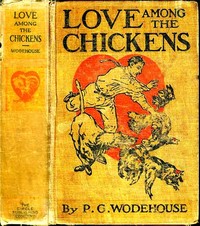
That naval guide kept circling back to how much of life happens in the spaces between orders—waiting, watching, reading a captain’s mood. It reminded me of the gentle chaos in Love Among the Chickens A Story of the Haps and Mishaps on an English Chicken Farm — Themes and Context, where the real story isn’t the fowl, but the quiet, fumbling human moments around them.

There are no reviews for this eBook.

0
0 out of 5 (0 User reviews )

Add a Review

Your Rating *
There are no comments for this eBook.

Reader reflection

How did this book work for you?

Your answers remain private and are stored only in this browser.

Your progress 0 / 10
1

How far have you progressed with this book?

2

How much did you enjoy the reading experience?

3

Is this a title you would suggest to others?

4

What was the reading difficulty like?

Related eBooks