1

Comrades — Inside the Classic
(0 User reviews)
1324
Project Gutenberg
2010
Not confirmed
Short stories; Married people -- Fiction; Older people -- Fiction; Connecticut -- Fiction; Veterans -- United States -- Fiction; Memorial Day -- Fiction
Readers of public-domain and historical texts
Project Gutenberg digital edition
en
Edition facts
Words
10,198
Reading time
45 min
Text sections
2
Comrades — Inside the Classic can be approached with a clearer sense of reading commitment from its source measurements: 10,198 words, 45 min estimated reading time, and 2 detected text sections.
The text analysis averages about 14.5 words per sentence, while the detected sections provide another way to judge how the source is divided.
Project Gutenberg metadata also associates the work with “Short stories,” connecting these edition facts with the source record’s subject description.
Source:
Project Gutenberg record #34255
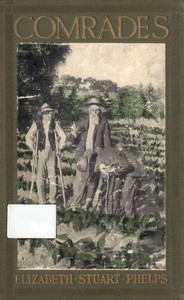
Phelps's 1911 story follows elderly veteran Reuben Oak, bedridden on Memorial Day, as his wife Patience tends him. The narrative shifts from domestic irritation to a solitary march, using restrained prose and sensory detail to explore memory, duty, and the invisible presence of the past.
Read the complete public-domain text at its original source.
Read on Project GutenbergThe story opens with an old man thrashing on his bed, indifferent to the late May evening and the flowers his wife has arranged. Phelps establishes a domestic tension immediately: Reuben Oak, a veteran of eighty-one, is petulant about being too ill to march in the Memorial Day parade. His wife Patience, whose name the narrator tells us is ironic—she was never naturally patient—swallows her surprise and thinks, “Poor boy! To be a veteran and can’t go!” The narrative voice here is wry and intimate, sliding between Patience’s thoughts and a detached observation of the couple’s fifty-year marriage.
A Voice That Shifts Between Irony and Tenderness
The narrator’s tone is notably flexible. Early passages carry a dry humor: Reuben’s profanity is called “memorable” because he is a good Baptist, and the flowers regard him “critically.” Yet the same voice can turn tender, as when Patience’s “profound maternal instinct” is described as a large element in a wife’s love. Phelps often uses short, declarative sentences to mark emotional beats—"He took it unreasonably; she could not deny that." The effect is a narrative that feels both compassionate and unsentimental, never letting the reader settle into a single mood.
Pace as a Marker of Inner and Outer Events
The story’s rhythm changes markedly when Reuben finally leaves the house. The early scenes are confined to the bedroom, with slow, circling sentences that mirror his restlessness. Once he steps outside, the prose becomes more urgent: “Suddenly he flared like lightwood on a camp-fire, and before his wife could speak again he had blazed out of the house.” The procession sequence is built with short paragraphs and repeated phrases—"Erect, with fiery eyes, with haughty head"—that mimic a march. Phelps also uses the crowd’s held breath and the band’s music to create a ceremonial pace, then breaks it with the old soldier’s unexpected faintness.
Recurring Details That Anchor the Narrative
Several small elements recur with quiet force. The flowers in the opening—tulips, fleurs-de-lis, pansies—return implicitly in the garden-loving wife’s care. The carpenter’s shop and tobacco fields are mentioned twice, grounding the story in the Connecticut valley. Most striking is the dog Tramp, buried under the big chestnut, whom Patience has “decorated” on previous Memorial Days. This detail, slipped into dialogue, hints at a private ritual that parallels the public one. The flags Reuben carries—first mentioned when he puts his company’s flag to his lips—become a physical emblem of the invisible comrades the crowd senses but cannot see.
Readers should attend to how Phelps uses the physical environment—flowers, weather, the carpenter’s shop—to reflect emotional states without stating them directly. The story’s brevity (about 10,000 words) rewards attention to its shifts in tempo and to the gaps in what characters say aloud. The ending, though not fully excerpted here, is prepared for by the careful accumulation of sensory and rhythmic detail throughout.
The rain kept my eyes on Phelps’s pages long past noon. Reuben’s quiet march, his wife’s worn hands—it lingered like damp air, that weight of a life half-lived. That evening, I found myself drifting toward another kind of love story, Henrietta Temple: A Love Story — Key Ideas to Explore, wondering how devotion’s shape changes when the war is only a courtship.
There are no reviews for this eBook.
There are no comments for this eBook.
Reader reflection
How will you remember this book?
Save your reaction, strongest insight, and memorable passage.
Your progress
0
/
10
2
Was reading this book enjoyable?
3
Would you recommend this book to another reader?
4
What was the reading difficulty like?
5
Was the book easy to understand?
6
Did anything about the book feel genuinely new?
7
What did you appreciate most?
8
Did the book deliver what you hoped for?
9
What did this book teach you most?
10