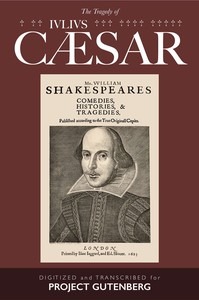
Julius Caesar by William Shakespeare

(7 User reviews)   4603
By Ashley Gutierrez Posted on Dec 11, 2025
In Category - Wildlife
Shakespeare, William, 1564-1616 Shakespeare, William, 1564-1616
English
Ever wondered how far people will go to stop someone they think is getting too powerful? 'Julius Caesar' isn't just about history. It's a tense political thriller set in ancient Rome. A group of senators, led by Brutus, believes their leader Caesar is a threat to the republic. They make a drastic choice: assassination. But the real drama starts after the deed is done. This play asks tough questions about loyalty, power, and the messy consequences of trying to do what you think is right. The speeches are legendary, the characters are deeply human, and the tension is absolutely gripping.
Share

Read "Julius Caesar by William Shakespeare" Online

This book is available in the public domain. Start reading the digital edition below.

START READING FULL BOOK
Instant Access    Mobile Friendly

Book Preview

A short preview of the book’s content is shown below to give you an idea of its style and themes.

Senators, Citizens, Soldiers, Commoners, Messengers, and Servants. SCENE: Rome, the conspirators’ camp near Sardis, and the plains of Philippi. ACT I SCENE I. Rome. A street. Enter Flavius, Marullus and a throng of Citizens. FLAVIUS. Hence! home, you idle creatures, get you home. Is this a holiday? What, know you not, Being mechanical, you ought not walk Upon a labouring day without the sign Of your profession? Speak, what trade art thou? CARPENTER. Why, sir, a carpenter. MARULLUS. Where is thy leather apron and thy rule? What dost thou with thy best apparel on? You, sir, what trade are you? COBBLER. Truly, sir, in respect of a fine workman, I am but, as you would say, a cobbler. MARULLUS. But what trade art thou? Answer me directly. COBBLER. A trade, sir, that I hope I may use with a safe conscience, which is indeed, sir, a mender of bad soles. MARULLUS. What trade, thou knave? Thou naughty knave, what trade? COBBLER. Nay, I beseech you, sir, be not out with me; yet, if you be out, sir, I can mend you. MARULLUS. What mean’st thou by that? Mend me, thou saucy fellow! COBBLER. Why, sir, cobble you. FLAVIUS. Thou art a cobbler, art thou? COBBLER. Truly, sir, all that I live by is with the awl; I meddle with no tradesman’s matters, nor women’s matters, but withal I am indeed, sir, a surgeon to old shoes: when they are in great danger, I recover them. As proper men as ever trod upon neat’s leather have gone upon my handiwork. FLAVIUS. But wherefore art not in thy shop today? Why dost thou lead these men about the streets? COBBLER. Truly, sir, to wear out their shoes, to get myself into more work. But indeed, sir, we make holiday to see Caesar, and to rejoice in his triumph. MARULLUS. Wherefore rejoice? What conquest brings he home? What tributaries follow him to Rome, To grace in captive bonds his chariot wheels? You blocks, you stones, you worse than senseless things! O you hard hearts, you cruel men of Rome, Knew you not Pompey? Many a time and oft Have you climb’d up to walls and battlements, To towers and windows, yea, to chimney tops, Your infants in your arms, and there have sat The livelong day with patient expectation, To see great Pompey pass the streets of Rome. And when you saw his chariot but appear, Have you not made an universal shout, That Tiber trembled underneath her banks To hear the replication of your sounds Made in her concave shores? And do you now put on your best attire? And do you now cull out a holiday? And do you now strew flowers in his way, That comes in triumph over Pompey’s blood? Be gone! Run to your houses, fall upon your knees, Pray to the gods to intermit the plague That needs must light on this ingratitude. FLAVIUS. Go, go, good countrymen, and, for this fault Assemble all the poor men of your sort, Draw them to Tiber banks, and weep your tears Into the channel, till the lowest stream Do kiss the most exalted shores of all. [_Exeunt Citizens._] See whether their basest metal be not mov’d; They vanish tongue-tied in their guiltiness. Go you down that way towards the Capitol; This way will I. Disrobe the images, If you do find them deck’d with ceremonies. MARULLUS. May we do so? You know it is the feast of Lupercal. FLAVIUS. It is no matter; let no images Be hung with Caesar’s trophies. I’ll about And drive away the vulgar from...

This is a limited preview. Download the book to read the full content.

The Story

Rome is buzzing. Julius Caesar, a triumphant military hero, is at the peak of his power. Some people adore him, but a group of senators, including his friend Brutus, fear he wants to be king and destroy the Roman Republic. Persuaded that it's for Rome's own good, Brutus joins a conspiracy to assassinate Caesar.

The plan works, but things immediately go wrong. Mark Antony, Caesar's loyal friend, cleverly turns the public against the conspirators with a famous, fiery speech. Brutus and his ally Cassius are forced to flee Rome, raising an army to fight Antony and Caesar's adopted heir, Octavius. The play races toward a final, decisive battle where personal honor, political ideals, and fate all collide.

Why You Should Read It

Forget dusty history lessons. This play feels incredibly current. It's about the collision of ideals and reality. Brutus is a fascinating character because he truly believes he's doing a noble thing, yet he sets off a chain of events far worse than what he tried to prevent. The arguments between Brutus and the more pragmatic Cassius feel like any heated debate among friends on a difficult issue. And Antony's speech is a masterclass in persuasion—you can almost hear the crowd's mood shift as he speaks.

Final Verdict

Perfect for anyone who loves a good political drama, moral dilemmas, or iconic speeches. If you think Shakespeare is all about confusing love poetry, this will be a fantastic surprise. It's fast-paced, full of conflict, and asks questions about power and conscience that we're still wrestling with today. A true classic that absolutely earns its reputation.


🏛️ Public Domain Content

This digital edition is based on a public domain text. It serves as a testament to our shared literary heritage.

Barbara Sanchez
4 months ago

After finishing this book, it manages to explain difficult concepts in plain English. Exactly what I needed.

Jackson Perez
1 year ago

Simply put, the arguments are well-supported by credible references. I would gladly recommend this title.

Richard Gonzalez
1 year ago

Amazing book.

Matthew Walker
4 months ago

After finishing this book, the character development leaves a lasting impact. Absolutely essential reading.

John Gonzalez
7 months ago

I was skeptical at first, but the atmosphere created is totally immersive. Truly inspiring.

4.5
4.5 out of 5 (7 User reviews )

Add a Review

Your Rating *
There are no comments for this eBook.
You must log in to post a comment.
Log in


Related eBooks