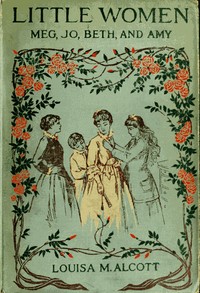
Little Women; Or, Meg, Jo, Beth, and Amy — Context and Discussion

(2 User reviews)   379
Alcott, Louisa May, 1832-1888, Merrill, Frank T., 1848-1923 [Illustrator] Project Gutenberg 2011
Autobiographical fiction; Young women -- Fiction; Sisters -- Fiction; Domestic fiction; Family life -- New England -- Fiction; New England -- Fiction; Bildungsromans; Mothers and daughters -- Fiction; March family (Fictitious characters) -- Fiction Readers of public-domain and historical texts
Project Gutenberg digital edition en

Edition facts

Words 196,185
Reading time 853 min
Text sections 25

For Little Women; Or, Meg, Jo, Beth, and Amy — Context and Discussion, the stored edition analysis reports 196,185 words, 14 hr 13 min estimated reading time, and 25 detected text sections.

The text analysis averages about 21.1 words per sentence, while the detected sections provide another way to judge how the source is divided.

Project Gutenberg metadata also associates the work with “Autobiographical fiction,” connecting these edition facts with the source record’s subject description.

Alcott's diction in Little Women blends domestic realism with allegorical echoes of Pilgrim's Progress, while dialogue reveals distinct sisterly voices and narrative commentary shapes moral lessons.
Share
Editorial Edition Score 4.9/5

Calculated from edition completeness, EPUB availability, text structure and catalogue metadata. Not a user rating.

How this score is calculated
  • Description quality20 pts
  • Title & short description10 pts
  • Source metadata20 pts
  • Text length15 pts
  • Chapters / structure15 pts
  • EPUB file integrity20 pts

Total of 100 points, scaled to a 2.5-5.0 range. Editions with an empty description or a missing EPUB file are not scored.

Edition quality

Read the Text

II. A MERRY CHRISTMAS

III. THE LAURENCE BOY

VI. BETH FINDS THE PALACE BEAUTIFUL

VII. AMY'S VALLEY OF HUMILIATION

VIII. JO MEETS APOLLYON

IX. MEG GOES TO VANITY FAIR

X. THE P. C. AND P. O.

XIII. CASTLES IN THE AIR

XVII. LITTLE FAITHFUL

XXI. LAURIE MAKES MISCHIEF, AND JO MAKES PEACE

XXII. PLEASANT MEADOWS

XXIII. AUNT MARCH SETTLES THE QUESTION

XXV. THE FIRST WEDDING

XXVI. ARTISTIC ATTEMPTS

XXVII. LITERARY LESSONS

XXVIII. DOMESTIC EXPERIENCES

XXXI. OUR FOREIGN CORRESPONDENT

XXXII. TENDER TROUBLES

XXXVII. NEW IMPRESSIONS

XXXVIII. ON THE SHELF

XL. THE VALLEY OF THE SHADOW

XLI. LEARNING TO FORGET

XLIV. MY LORD AND LADY

XLVI. UNDER THE UMBRELLA

[The Illustrations, designed by FRANK T. MERRILL, drawn, engraved, and printed under the supervision of GEORGE T. ANDREW.]

They all drew to the fire, mother in the big chair, with Beth at her feet

Tail-piece to Contents

List of Illustrations

Tail-piece to Illustrations

Christmas won't be Christmas without any presents

Beth put a pair of slippers down to warm

I used to be so frightened when it was my turn to sit in the big chair

Do it this way, clasp your hands so

It was a cheerful, hopeful letter

How you used to play Pilgrim's Progress

No one but Beth could get much music out of the old piano

At nine they stopped work and sung as usual

The procession set out

Out came Meg with gray horse-hair hanging about her face

A little figure in cloudy white

The lovers kneeling to receive Don Pedro's blessing

We talked over the fence

Eating apples and crying over the "Heir of Redclyffe"

Jo undertook to pinch the papered locks

Mrs. Gardiner greeted them

Face to face with the Laurence boy

They sat down on the stairs

The kitten stuck like a burr just out of reach

Curling herself up in the big chair

Reading that everlasting Belsham

He took her by the ear! by the ear!

Mr. Laurence hooked up a big fish

Laurie opened the window

Poll tweaked off his wig

Putting his finger under her chin

Please give these to your mother

O sir, they do care very much

Mr. Laurence often opened his study door

She put both arms around his neck and kissed him

Amy bore without flinching several tingling blows

Girls, where are you going?

Held Amy up by his arms and hockey

Packing the go abroady trunk

Meg's partner appeared

Asked to be introduced

Holding a hand of each, Mrs. March said, &c.

Jo threw open the door of the closet

Jo spent the morning on the river

Miss Crocker made a wry face

Beth was post-mistress

Amy capped the climax by putting a clothes-pin on her nose 151

Mr. Laurence waving his hat

Now, Miss Jo, I'll settle you

A very merry lunch it was

He went prancing down a quiet street

A stunning blow from the big Greek lexicon

The Portuguese walked the plank

Will you give me a rose?

Miss Kate put up her glass

Swinging to and fro in his hammock

It was rather a pretty little picture

Waved a brake before her face

I see him bow and smile

Hurrah for Miss March

Jo laid herself on the sofa and affected to read

November is the most disagreeable month in the year

One of them horrid telegraph things

She came suddenly upon Mr. Brooke

Yours Respectful, Hannah Mullet

It didn't stir, and I knew it was dead

He sat down beside her

What do you want now?

Beth did have the fever

Gently stroking her head as her mother used to do

Polish up the spoons and the fat silver teapot

On his back, with all his legs in the air

Gravely promenaded to and fro

Mrs. March would not leave Beth's side

Jo and her mother were reading the note

Get up and don't be a goose

"Hold your tongue!" cried Jo, covering her ears

He stood at the foot, like a lion in the path

Beth was soon able to lie on the study sofa all day

Popping in her head now and then

He sat in the big chair by Beth's sofa with the other three close by

Shall I tell you how?

Bless me, what's all this?

Home of the Little Women

A small watchman's rattle

Her foot held fast in a panful of plaster

Please don't, it's mine

A check for one hundred dollars

Both felt desperately uncomfortable

A bargain, I assure you, ma'am

Laurie heroically shut his eyes while something was put into his arms

She took the saddle to the horse

It might have been worse

The call at Aunt March's

You shall have another table

Bought up the bouquets

Flo and I ordered a hansom-cab

Every one was very kind, especially the officers

I've seen the imperial family several times

Trying to sketch the gray-stone lion's head on the wall

She leaned her head upon her hands

Now, this is filling at the price

Up with the Bonnets of Bonnie Dundee

I amused myself by dropping gingerbread nuts over the seat

Thou shalt haf thy Bhaer

He waved his hand, sock and all

I sat down upon the floor and read and looked and ate

In the presence of three gentlemen

He doesn't prink at his glass before coming

Jo stuffed the whole bundle into the stove

He put the sisters into the carriage

He laid his head down on the mossy post

With her head in Jo's lap, while the wind blew healthfully over her

He hurried forward to meet her

Here are your flowers

My dear man, it's a bonnet

Sat piping on a stone while his goats skipped

Laurie threw himself down on the turf

A rough sketch of Laurie taming a horse

The Valley of the Shadow

Sat staring up at the busts

Turning the ring thoughtfully upon his finger

O Laurie, Laurie, I knew you'd come

How well we pull together

Jo laid her head on a comfortable rag-bag and cried

A substantial lifelike ghost leaning over her

The tall uncle proceeded to toss and tousle the small nephew

O Mr. Bhaer, I am so glad to see you

Mr. Bhaer sang heartily

Mrs. Laurence sitting in her mother's lap

They began to pace up and down

What makes my legs go, dranpa?

Mr. Bhaer and Jo were enjoying promenades

Looking up she saw Mr. Bhaer

Does this suit you, Mr. Bhaer?

Teddy bore a charmed life

Leaving Mrs. March and her daughters under the festival tree

"Christmas won't be Christmas without any presents," grumbled Jo, lying on the rug.

"It's so dreadful to be poor!" sighed Meg, looking down at her old dress.

"I don't think it's fair for some girls to have plenty of pretty things, and other girls nothing at all," added little Amy, with an injured sniff.

"We've got father and mother and each other," said Beth contentedly, from her corner.

The four young faces on which the firelight shone brightened at the cheerful words, but darkened again as Jo said sadly,--

"We haven't got father, and shall not have him for a long time." She didn't say "perhaps never," but each silently added it, thinking of father far away, where the fighting was.

Nobody spoke for a minute; then Meg said in an altered tone,--

"You know the reason mother proposed not having any presents this Christmas was because it is going to be a hard winter for every one; and she thinks we ought not to spend money for pleasure, when our men are suffering so in the army. We can't do much, but we can make our little sacrifices, and ought to do it gladly. But I am afraid I don't;" and Meg shook her head, as she thought regretfully of all the pretty things she wanted.

"But I don't think the little we should spend would do any good. We've each got a dollar, and the army wouldn't be much helped by our giving that. I agree not to expect anything from mother or you, but I do want to buy Undine and Sintram for myself; I've wanted it _so_ long," said Jo, who was a bookworm.

"I planned to spend mine in new music," said Beth, with a little sigh, which no one heard but the hearth-brush and kettle-holder.

"I shall get a nice box of Faber's drawing-pencils; I really need them," said Amy decidedly.

"Mother didn't say anything about our money, and she won't wish us to give up everything. Let's each buy what we want, and have a little fun; I'm sure we work hard enough to earn it," cried Jo, examining the heels of her shoes in a gentlemanly manner.

"I know _I_ do,--teaching those tiresome children nearly all day, when I'm longing to enjoy myself at home," began Meg, in the complaining tone again.

"You don't have half such a hard time as I do," said Jo. "How would you like to be shut up for hours with a nervous, fussy old lady, who keeps you trotting, is never satisfied, and worries you till you're ready to fly out of the window or cry?"

"It's naughty to fret; but I do think washing dishes and keeping things tidy is the worst work in the world. It makes me cross; and my hands get so stiff, I can't practise well at all;" and Beth looked at her rough hands with a sigh that any one could hear that time.

"I don't believe any of you suffer as I do," cried Amy; "for you don't have to go to school with impertinent girls, who plague you if you don't know your lessons, and laugh at your dresses, and label your father if he isn't rich, and insult you when your nose isn't nice."

"If you mean _libel_, I'd say so, and not talk about _labels_, as if papa was a pickle-bottle," advised Jo, laughing.

"I know what I mean, and you needn't be _statirical_ about it. It's proper to use good words, and improve your _vocabilary_," returned Amy, with dignity.

"Don't peck at one another, children. Don't you wish we had the money papa lost when we were little, Jo? Dear me! how happy and good we'd be, if we had no worries!" said Meg, who could remember better times.

"You said the other day, you thought we were a deal happier than the King children, for they were fighting and fretting all the time, in spite of their money."

"So I did, Beth. Well, I think we are; for, though we do have to work, we make fun for ourselves, and are a pretty jolly set, as Jo would say."

"Jo does use such slang words!" observed Amy, with a reproving look at the long figure stretched on the rug. Jo immediately sat up, put her hands in her pockets, and began to whistle.

"Don't, Jo; it's so boyish!"

"That's why I do it."

"I detest rude, unlady-like girls!"

"I hate affected, niminy-piminy chits!"

"'Birds in their little nests agree,'" sang Beth, the peace-maker, with such a funny face that both sharp voices softened to a laugh, and the "pecking" ended for that time.

"Really, girls, you are both to be blamed," said Meg, beginning to lecture in her elder-sisterly fashion. "You are old enough to leave off boyish tricks, and to behave better, Josephine. It didn't matter so much when you were a little girl; but now you are so tall, and turn up your hair, you should remember that you are a young lady."

"I'm not! and if turning up my hair makes me one, I'll wear it in two tails till I'm twenty," cried Jo, pulling off her net, and shaking down a chestnut mane. "I hate to think I've got to grow up, and be Miss March, and wear long gowns, and look as prim as a China-aster! It's bad enough to be a girl, anyway, when I like boys' games and work and manners! I can't get over my disappointment in not being a boy; and it's worse than ever now, for I'm dying to go and fight with papa, and I can only stay at home and knit, like a poky old woman!" And Jo shook the blue army-sock till the needles rattled like castanets, and her ball bounded across the room.

"Poor Jo! It's too bad, but it can't be helped; so you must try to be contented with making your name boyish, and playing brother to us girls," said Beth, stroking the rough head at her knee with a hand that all the dish-washing and dusting in the world could not make ungentle in its touch.

"As for you, Amy," continued Meg, "you are altogether too particular and prim. Your airs are funny now; but you'll grow up an affected little goose, if you don't take care. I like your nice manners and refined ways of speaking, when you don't try to be elegant; but your absurd words are as bad as Jo's slang."

"If Jo is a tom-boy and Amy a goose, what am I, please?" asked Beth, ready to share the lecture.

"You're a dear, and nothing else," answered Meg warmly; and no one contradicted her, for the "Mouse" was the pet of the family.

As young readers like to know "how people look," we will take this moment to give them a little sketch of the four sisters, who sat knitting away in the twilight, while the December snow fell quietly without, and the fire crackled cheerfully within. It was a comfortable old room, though the carpet was faded and the furniture very plain; for a good picture or two hung on the walls, books filled the recesses, chrysanthemums and Christmas roses bloomed in the windows, and a pleasant atmosphere of home-peace pervaded it.

Margaret, the eldest of the four, was sixteen, and very pretty, being plump and fair, with large eyes, plenty of soft, brown hair, a sweet mouth, and white hands, of which she was rather vain. Fifteen-year-old Jo was very tall, thin, and brown, and reminded one of a colt; for she never seemed to know what to do with her long limbs, which were very much in her way. She had a decided mouth, a comical nose, and sharp, gray eyes, which appeared to see everything, and were by turns fierce, funny, or thoughtful. Her long, thick hair was her one beauty; but it was usually bundled into a net, to be out of her way. Round shoulders had Jo, big hands and feet, a fly-away look to her clothes, and the uncomfortable appearance of a girl who was rapidly shooting up into a woman, and didn't like it. Elizabeth--or Beth, as every one called her--was a rosy, smooth-haired, bright-eyed girl of thirteen, with a shy manner, a timid voice, and a peaceful expression, which was seldom disturbed. Her father called her "Little Tranquillity," and the name suited her excellently; for she seemed to live in a happy world of her own, only venturing out to meet the few whom she trusted and loved. Amy, though the youngest, was a most important person,--in her own opinion at least. A regular snow-maiden, with blue eyes, and yellow hair, curling on her shoulders, pale and slender, and always carrying herself like a young lady mindful of her manners. What the characters of the four sisters were we will leave to be found out.

The clock struck six; and, having swept up the hearth, Beth put a pair of slippers down to warm. Somehow the sight of the old shoes had a good effect upon the girls; for mother was coming, and every one brightened to welcome her. Meg stopped lecturing, and lighted the lamp, Amy got out of the easy-chair without being asked, and Jo forgot how tired she was as she sat up to hold the slippers nearer to the blaze.

"They are quite worn out; Marmee must have a new pair."

"I thought I'd get her some with my dollar," said Beth.

"No, I shall!" cried Amy.

"I'm the oldest," began Meg, but Jo cut in with a decided--

"I'm the man of the family now papa is away, and _I_ shall provide the slippers, for he told me to take special care of mother while he was gone."

"I'll tell you what we'll do," said Beth; "let's each get her something for Christmas, and not get anything for ourselves."

"That's like you, dear! What will we get?" exclaimed Jo.

Every one thought soberly for a minute; then Meg announced, as if the idea was suggested by the sight of her own pretty hands, "I shall give her a nice pair of gloves."

"Army shoes, best to be had," cried Jo.

"Some handkerchiefs, all hemmed," said Beth.

"I'll get a little bottle of cologne; she likes it, and it won't cost much, so I'll have some left to buy my pencils," added Amy.

"How will we give the things?" asked Meg.

"Put them on the table, and bring her in and see her open the bundles. Don't you remember how we used to do on our birthdays?" answered Jo.

"I used to be _so_ frightened when it was my turn to sit in the big chair with the crown on, and see you all come marching round to give the presents, with a kiss. I liked the things and the kisses, but it was dreadful to have you sit looking at me while I opened the bundles," said Beth, who was toasting her face and the bread for tea, at the same time.

"Let Marmee think we are getting things for ourselves, and then surprise her. We must go shopping to-morrow afternoon, Meg; there is so much to do about the play for Christmas night," said Jo, marching up and down, with her hands behind her back and her nose in the air.

"I don't mean to act any more after this time; I'm getting too old for such things," observed Meg, who was as much a child as ever about "dressing-up" frolics.

"You won't stop, I know, as long as you can trail round in a white gown with your hair down, and wear gold-paper jewelry. You are the best actress we've got, and there'll be an end of everything if you quit the boards," said Jo. "We ought to rehearse to-night. Come here, Amy, and do the fainting scene, for you are as stiff as a poker in that."

"I can't help it; I never saw any one faint, and I don't choose to make myself all black and blue, tumbling flat as you do. If I can go down easily, I'll drop; if I can't, I shall fall into a chair and be graceful; I don't care if Hugo does come at me with a pistol," returned Amy, who was not gifted with dramatic power, but was chosen because she was small enough to be borne out shrieking by the villain of the piece.

"Do it this way; clasp your hands so, and stagger across the room, crying frantically, 'Roderigo! save me! save me!'" and away went Jo, with a melodramatic scream which was truly thrilling.

Amy followed, but she poked her hands out stiffly before her, and jerked herself along as if she went by machinery; and her "Ow!" was more suggestive of pins being run into her than of fear and anguish. Jo gave a despairing groan, and Meg laughed outright, while Beth let her bread burn as she watched the fun, with interest.

"It's no use! Do the best you can when the time comes, and if the audience laugh, don't blame me. Come on, Meg."

Then things went smoothly, for Don Pedro defied the world in a speech of two pages without a single break; Hagar, the witch, chanted an awful incantation over her kettleful of simmering toads, with weird effect; Roderigo rent his chains asunder manfully, and Hugo died in agonies of remorse and arsenic, with a wild "Ha! ha!"

"It's the best we've had yet," said Meg, as the dead villain sat up and rubbed his elbows.

"I don't see how you can write and act such splendid things, Jo. You're a regular Shakespeare!" exclaimed Beth, who firmly believed that her sisters were gifted with wonderful genius in all things.

"Not quite," replied Jo modestly. "I do think 'The Witch's Curse, an Operatic Tragedy,' is rather a nice thing; but I'd like to try Macbeth, if we only had a trap-door for Banquo. I always wanted to do the killing part. 'Is that a dagger that I see before me?'" muttered Jo, rolling her eyes and clutching at the air, as she had seen a famous tragedian do.

"No, it's the toasting fork, with mother's shoe on it instead of the bread. Beth's stage-struck!" cried Meg, and the rehearsal ended in a general burst of laughter.

From its first sentence—'Christmas won't be Christmas without any presents'—Alcott establishes a voice that is at once intimate and gently ironic. The March sisters speak in distinct registers: Meg's maternal practicality, Jo's impulsive slang, Beth's shy murmurs, and Amy's affected refinement. The narrator frequently interjects with wry asides, such as noting that Jo 'was so overcome with laughter' while excavating Amy's foot from plaster that 'her knife went too far.' These authorial choices in diction and dialogue create a layered texture where domestic realism and moral instruction coexist.

Pilgrim's Progress as Structural and Verbal Framework

The chapter titles—'Playing Pilgrims,' 'Beth finds the Palace Beautiful,' 'Amy's Valley of Humiliation'—directly invoke Bunyan's allegory. Alcott does not merely allude; she weaves the metaphor into the sisters' private language. When Mrs. March suggests they 'play Pilgrim's Progress,' the girls adopt the roles as a game, yet the narrator treats the parallels seriously. The burden imagery recurs: Jo's 'bosom enemy' is her temper, Amy's 'Valley of Humiliation' involves pickled limes at school. This dual register—childlike play and earnest moral framework—shapes the novel's tone. Alcott's diction shifts between homely detail ('a broken mullein-stalk') and allegorical weight ('the Valley of the Shadow'), grounding abstract lessons in concrete, domestic experience.

Dialogue as Character Revelation

Each sister's speech patterns are sharply individuated. Jo's exclamations—'Christopher Columbus!'—and her habit of 'talking in slang' mark her as restless and rebellious. Amy's speech is studied: she 'always said the right thing to the right person,' a tact that the narrator notes is both a gift and a weakness. Meg's dialogue tends toward the practical and maternal, while Beth speaks rarely and softly. Alcott also uses dialogue to expose social tensions. When Amy asks to invite her rich friends, Mrs. March replies with 'her Maria Theresa air,' a phrase that signals both maternal pride and class consciousness. The narrator's commentary on Amy's 'desire to move in our best society' is reinforced by Amy's own words, which reveal her careful cultivation of 'aristocratic tastes.'

Narrative Voice and Moral Commentary

Alcott's narrator is omniscient and opinionated, frequently stepping in to interpret events. Describing Amy's artistic ambitions, the narrator observes that 'if genius is eternal patience, as Michael Angelo affirms, Amy certainly had some claim to the divine attribute.' This blend of high reference and gentle mockery is characteristic. The narrator also generalizes: 'Money cannot buy refinement of nature, that rank does not always confer nobility.' Such aphorisms are woven into the descriptive texture, not set apart as lessons. The voice is that of a wise, affectionate aunt—knowing but not harsh. This narrative stance allows Alcott to critique her characters' foibles while maintaining sympathy, as when she notes that Amy 'sincerely desired to be a genuine lady, and was so at heart, but had yet to learn.'

Descriptive Diction and the Domestic Landscape

Alcott's descriptive passages anchor the story in a tangible New England setting. Objects are named precisely: 'a stone, a stump, one mushroom, and a broken mullein-stalk' compose Amy's 'delicious bit' of landscape. The 'old piano' from which 'no one but Beth could get much music' is both a physical object and a symbol. The house itself is rendered through accumulated detail—the 'big chair' by the fire, the slippers warming, the 'cheerful, hopeful letter.' This specificity creates a world that feels lived in. Alcott's diction favors concrete nouns and active verbs: Beth 'put a pair of slippers down to warm,' Jo 'hopped wildly about the shed.' The domestic is never merely background; it is the arena where character is tested and revealed.

Readers attentive to Alcott's craft will notice how the narrator's tone modulates between irony and tenderness, how each sister's idiom marks her trajectory, and how the Bunyanesque chapter headings are not decorative but structural. The novel rewards attention to its verbal texture—the precise naming of objects, the layered dialogue, the moral asides that feel earned rather than imposed. These authorial choices make Little Women a work of deliberate artistry, not merely a sentimental chronicle.

That rainy afternoon, listening to Jo’s sharp, restless voice argue with Amy’s primness, I kept thinking about how our own choices secret us into stories. Alcott’s allegorical undercurrent felt so cozy, yet it lingered with a strange ache. Later, idly, I found myself drifting into The Girl and the Bill An American Story of Mystery, Romance and Adventure — Text and Context, its darker, quicker current a quiet contrast to that familiar parlor warmth.

Sophia Walker
2 weeks ago

Alexander Lewis
1 week ago

4
4 out of 5 (2 User reviews )

Add a Review

Your Rating *
There are no comments for this eBook.

Reader reflection

What did you think of this book?

Answer a few questions and save a private reflection on this device.

Your progress 0 / 10
1

How far have you progressed with this book?

2

What was your overall reaction to the book?

3

Would you encourage someone else to read it?

4

How much effort did this book require?

Related eBooks