Nights With Uncle Remus — Reading Notes
Edition facts
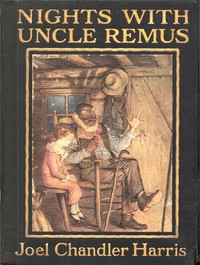
Nights With Uncle Remus — Reading Notes can be approached with a clearer sense of reading commitment from its source measurements: 117,016 words, 8 hr 29 min estimated reading time, and 14 detected text sections.
The text analysis averages about 18.4 words per sentence, while the detected sections provide another way to judge how the source is divided.
Project Gutenberg metadata also associates the work with “Animals -- Fiction,” connecting these edition facts with the source record’s subject description.
Calculated from edition completeness, EPUB availability, text structure and catalogue metadata. Not a user rating.
How this score is calculated
- Description quality20 pts
- Title & short description10 pts
- Source metadata20 pts
- Text length15 pts
- Chapters / structure15 pts
- EPUB file integrity20 pts
Total of 100 points, scaled to a 2.5-5.0 range. Editions with an empty description or a missing EPUB file are not scored.
Read the Text
There was a pause after the story of old Miss Goose. The culmination was hardly sensational enough to win the hearty applause of the little boy, and this fact appeared to have a depressing influence upon Uncle Remus. As he leaned slightly forward, gazing into the depths of the great fireplace, his attitude was one of pensiveness.
"I 'speck I done wo' out my welcome up at de big house," he said, after a while. "I mos' knows I is," he continued, setting himself resignedly in his deep-bottomed chair. "Kase de las' time I uz up dar, I had my eye on Miss Sally mighty nigh de whole blessid time, en w'en you see Miss Sally rustlin' 'roun' makin' lak she fixin' things up dar on de mantle-shelf, en bouncin' de cheers 'roun', en breshin' dus' whar dey ain't no dus', en flyin' 'roun' singin' sorter louder dan common, den I des knows sump'n' done gone en rile 'er."
"Why, Uncle Remus!" exclaimed the little boy; "Mamma was just glad because I was feeling so good."
"Mought er bin," the old man remarked, in a tone that was far from implying conviction. "Ef 't wa'n't dat, den she wuz gittin' tired er seem' me lounjun' 'roun' up dar night atter night, en ef 't wa'n't dat, den she wuz watchin' a chance fer ter preach ter yo' pa. Oh, I done bin know Miss Sally long fo' yo' pa is!" exclaimed Uncle Remus, in response to the astonishment depicted upon the child's face. "I bin knowin' 'er sence she wuz so high, en endurin' er all dat time I ain't seed no mo' up'n spoken' w'ite 'oman dan w'at Miss Sally is.
"But dat ain't needer yer ner dar. You done got so youk'n rush down yer des like you useter, en we kin set yer en smoke, en tell tales, en study up 'musements same like we wuz gwine on 'fo' you got dat splinter in yo' foot.
"I mines me er one time"--with an infectious laugh--"w'en ole Brer Rabbit got Brer Fox in de wuss trubble w'at a man wuz mos' ever got in yit, en dat 'uz w'en he fool 'im 'bout de hoss. Ain't I never tell you 'bout dat? But no marter ef I is. Hoe-cake ain't cook done good twel hit's turnt over a couple er times.
"Well, atter Brer Fox done git rested fum keepin' out er de way er Mr. Dog, en sorter ketch up wid his rations, he say ter hisse'f dat he be dog his cats ef he don't slorate ole Brer Rabbit ef it take 'im a mont'; en dat, too, on top er all de 'spe'unce w'at he done bin had wid um. Brer Rabbit he sorter git win' er dis, en one day, w'iles he gwine 'long de road studyin' how he gwineter hol' he hand wid Brer Fox, he see a great big Hoss layin' stretch out flat on he side in de pastur'; en he tuck'n crope up, he did, fer ter see ef dish yer Hoss done gone en die. He crope up en he crope 'roun', en bimeby he see de Hoss switch he tail, en den Brer Rabbit know he ain't dead. Wid dat, Brer Rabbit lope back ter de big road, en mos' de fus' man w'at he see gwine on by wuz Brer Fox, en Brer Rabbit he tuck atter 'im, en holler:--
"'Brer Fox! O Brer Fox! Come back! I got some good news fer you. Come back, Brer Fox,' sezee.
"Brer Fox, he tu'n 'roun', he did, en w'en he see who callin' 'im, he come gallopin' back, kaze it seem like dat des ez gooder time ez any fer ter nab Brer Rabbit; but 'fo' he git in nabbin' distance, Brer Rabbit he up'n say, sezee:--
"'Come on, Brer Fox! I done fine de place whar you kin lay in fresh meat 'nuff fer ter las' you plum twel de middle er nex' year,' sezee.
"Brer Fox, he ax wharbouts, en Brer Rabbit, he say, right over dar in de pastur', en Brer Fox ax w'at is it, en Brer Rabbit, he say w'ich 'twuz a whole Hoss layin' down on de groun' whar dey kin ketch 'im en tie 'im. Wid dat, Brer Fox, he say come on, en off dey put.
"W'en dey got dar, sho' nuff, dar lay de Hoss all stretch out in de sun, fas' 'sleep, en den Brer Fox en Brer Rabbit, dey had a 'spute 'bout how dey gwine ter fix de Hoss so he can't git loose. One say one way en de yuther say n'er way, en dar dey had it, twel atter w'ile Brer Rabbit, he say, sezee:--
"'De onliest plan w'at I knows un, Brer Fox,' sezee, 'is fer you ter git down dar en lemme tie you ter de Hoss tail, en den, w'en he try ter git up, you kin hol' 'im down,' sezee. 'Ef I wuz big man like w'at you is,' sez Brer Rabbit, sezee, 'you mought tie me ter dat Hoss' tail, en ef I ain't hol' 'im down, den Joe's dead en Sal's a widder. I des knows you kin hol' 'im down,' sez Brer Rabbit, sezee, 'but yit, ef you 'feared, we des better drap dat idee en study out some yuther plan,' sezee.
"Brer Fox sorter jubus 'bout dis, but he bleedzd ter play biggity 'fo' Brer Rabbit, en he tuck'n 'gree ter de progrance, en den Brer Rabbit, he tuck'n tie Brer Fox ter de Hoss' tail, en atter he git 'im tie dar hard en fas', he sorter step back, he did, en put he han's 'kimbo, en grin, en den he say, sezee:--
"Ef ever dey wuz a Hoss kotch, den we done kotch dis un. Look sorter lak we done put de bridle on de wrong een',' sezee, 'but I lay Brer Fox is got de strenk fer ter hol' 'im,' sezee.
"Wid dat, Brer Rabbit cut 'im a long switch en trim it up, en w'en he get it fix, up he step en hit de Hoss a rap--_pow!_ De Hoss 'uz dat s'prise at dat kinder doin's dat he make one jump, en lan' on he foots. W'en he do dat, dar wuz Brer Fox danglin' in de a'r, en Brer Rabbit, he dart out de way en holler:--
"'Hol' 'im down, Brer Fox! Hol' 'im down! I'll stan' out yer en see fa'r play. Hol' 'im down, Brer Fox! Hol' 'im down!'
"Co'se, w'en de Hoss feel Brer Fox hangin' dar onter he tail, he thunk sump'n' kuse wuz de marter, en dis make 'im jump en r'ar wusser en wusser, en he shake up Brer Fox same like he wuz a rag in de win', en Brer Rabbit, he jump en holler:--
"'Hol' 'im down, Brer Fox! Hol' 'im down! You got 'im now, sho'! Hol' yo' grip, en hol' 'im down,' sezee.
"De Hoss, he jump en he hump, en he rip en he r'ar, en he snort en he t'ar. But yit Brer Fox hang on, en still Brer Rabbit skip 'roun' en holler:--
"'Hol' 'im down, Brer Fox! You got 'im whar he can't needer back ner squall. Hol' 'im down, Brer Fox!' sezee.
"Bimeby, w'en Brer Fox git chance, he holler back, he did:--
"'How in de name er goodness I gwine ter hol' de Hoss down 'less I git my claw in de groun'?'
"Den Brer Rabbit, he stan' back little furder en holler little louder:--
"'Hol' 'im down, Brer Fox! Hol' 'im down! You got 'im now, sho'! Hol' 'im down!'
"Bimeby de Hoss 'gun ter kick wid he behime legs, en de fus' news you know, he fetch Brer Fox a lick in de stomach dat fa'rly make 'im squall, en den he kick 'im ag'in, en dis time he break Brer Fox loose, en sont 'im a-whirlin'; en Brer Rabbit, he keep on a-jumpin' 'roun' en hollerin':--
"'Hol' 'im down, Brer Fox!'"
"Did the fox get killed, Uncle Remus?" asked the little boy.
"He wa'n't 'zackly kilt, honey," replied the old man, "but he wuz de nex' do' ter't. He 'uz all broke up, en w'iles he 'uz gittin' well, hit sorter come 'cross he min' dat Brer Rabbit done play n'er game on 'im."
BRER RABBIT AND THE LITTLE GIRL
"What did Brother Rabbit do after that?" the little boy asked presently.
"Now, den, you don't wanter push ole Brer Rabbit too close," replied Uncle Remus significantly. "He mighty tender-footed creetur, en de mo' w'at you push 'im, de furder he lef' you."
There was prolonged silence in the old man's cabin, until, seeing that the little boy was growing restless enough to cast several curious glances in the direction of the tool chest in the corner, Uncle Remus lifted one leg over the other, scratched his head reflectively, and began:--
"One time, atter Brer Rabbit done bin trompin' 'roun' huntin' up some sallid fer ter make out he dinner wid, he fine hisse'f in de neighborhoods er Mr. Man house, en he pass 'long twel he come ter de gyardin-gate, en nigh de gyardin-gate he see Little Gal playin' 'roun' in de san'. Wen Brer Rabbit look 'twix' de gyardin-palin's en see de colluds, en de sparrer-grass, en de yuther gyardin truck growin' dar, hit make he mouf water. Den he take en walk up ter de Little Gal, Brer Rabbit did, en pull he roach,[1] en bow, en scrape he foot, en talk mighty nice en slick.
"'Howdy, Little Gal,' sez Brer Rabbit, sezee; 'how you come on?' sezee.
"Den de Little Gal, she 'spon' howdy, she did, en she ax Brer Rabbit how he come on, en Brer Rabbit, he 'low he mighty po'ly, en den he ax ef dis de Little Gal w'at 'er pa live up dar in de big w'ite house, w'ich de Little Gal, she up'n say 'twer'. Brer Rabbit, he say he mighty glad, kaze he des bin up dar fer to see 'er pa, en he say dat 'er pa, he sont 'im out dar fer ter tell de Little Gal dat she mus' open de gyardin-gate so Brer Rabbit kin go in en git some truck. Den de Little Gal, she jump 'roun', she did, en she open de gate, en wid dat, Brer Rabbit, he hop in, he did, en got 'im a mess er greens, en hop out ag'in, en w'en he gwine off he make a bow, he did, en tell de Little Gal dat he much 'blije', en den atter dat he put out fer home.
"Nex' day, Brer Rabbit, he hide out, he did, twel he see de Little Gal come out ter play, en den he put up de same tale, en walk off wid a n'er mess er truck, en hit keep on dis a-way, twel bimeby Mr. Man, he 'gun ter miss his greens, en he keep on a-missin' un um, twel he got ter excusin' eve'ybody on de place er 'stroyin' un um, en w'en dat come ter pass, de Little Gal, she up'n say:--
"'My goodness, pa!' sez she, 'you done tole Mr. Rabbit fer ter come and make me let 'im in de gyardin atter some greens, en ain't he done come en ax me, en ain't I done gone en let 'im in?' sez she.
"Mr. Man ain't hatter study long 'fo' he see how de lan' lay, en den he laff, en tell de Little Gal dat he done gone en disremember all 'bout Mr. Rabbit, en den he up'n say, sezee:--
"'Nex' time Mr. Rabbit come, you tak'n tu'n 'im in, en den you run des ez fas' ez you kin en come en tell me, kase I got some bizness wid dat young chap dat's bleedze ter be 'ten' ter,' sezee.
"Sho' nuff, nex' mawnin' dar wuz de Little Gal playin' 'roun', en yer come Brer Rabbit atter he 'lowance er greens. He wuz ready wid de same tale, en den de Little Gal, she tu'n 'im in, she did, en den she run up ter de house en holler:--
"'O pa! pa! O pa! Yer Brer Rabbit in de gyardin now! Yer he is, pa!'
"Den Mr. Man, he rush out, en grab up a fishin'-line w'at bin hangin' in de back po'ch, en mak fer de gyardin, en w'en he git dar, dar wuz Brer Rabbit tromplin' 'roun' on de strawbe'y-bed en mashin' down de termartusses. W'en Brer Rabbit see Mr. Man, he squot behime a collud leaf, but 't wa'n't no use. Mr. Man done seed him, en 'fo' you kin count 'lev'm, he done got ole Brer Rabbit tie hard en fas' wid de fishin'-line. Atter he got him tie good, Mr. Man step back, he did, en say, sezee:--
"'You done bin fool me lots er time, but dis time you er mine. I'm gwine ter take you en gin you a larrupin',' sezee, 'en den I'm gwine ter skin you en nail yo' hide on de stable do',' sezee; 'en den ter make sho dat you git de right kinder larrupin', I'll des step up ter de house,' sezee, 'en fetch de little red cowhide, en den I'll take en gin you brinjer,' sezee.
"Den Mr. Man call to der Little Gal ter watch Brer Rabbit w'iles he gone.
"Brer Rabbit ain't sayin' nothin', but Mr. Man ain't mo'n out de gate 'fo' he 'gun ter sing; en in dem days Brer Rabbit wuz a singer, mon," continued Uncle Remus, with unusual emphasis, "en w'en he chuned up fer ter sing he make dem yuther creeturs hol' der bref."
"What did he sing, Uncle Remus?" asked the little boy.
"Ef I ain't fergit dat song off'n my min'," said Uncle Remus, looking over his spectacles at the fire, with a curious air of attempting to remember something, "hit run sorter dish yer way:--
"'_De jay-bird hunt de sparrer-nes', De bee-martin sail all 'roun'; De squer'l, he holler from de top er de tree, Mr. Mole, he stay in de groun'; He hide en he stay twel de dark drop down-- Mr. Mole, he hide in de groun'._'
"W'en de Little Gal year dat, she laugh, she did, and she up'n ax Brer Babbit fer ter sing some mo', but Brer Rabbit, he sorter cough, he did, en 'low dat he got a mighty bad ho'seness down inter he win'pipe some'rs. De Little Gal, she swade,[2] en swade, en bimeby Brer Rabbit, he up 'n 'low dat he kin dance mo' samer dan w'at he kin sing. Den de Little Gal, she ax' im won't he dance, en Brer Rabbit, he 'spon' how in de name er goodness kin a man dance w'iles he all tie up dis a-way, en den de Little Gal, she say she kin ontie 'im, en Brer Rabbit, he say he ain't keerin' ef she do. Wid dat de Little Gal, she retch down en onloose de fish-line, en Brer Rabbit, he sorter stretch hisse'f en look 'roun'."
Here Uncle Remus paused and sighed, as though he had relieved his mind of a great burden. The little boy waited a few minutes for the old man to resume, and finally he asked:--
"Did the Rabbit dance, Uncle Remus?"
"Who? Him?" exclaimed the old man, with a queer affectation of elation. "Bless yo' soul, honey! Brer Rabbit gedder up his foots und' 'im, en he dance outer dat gyardin, en he dance home. He did dat! Sho'ly you don't 'speck' dat a ole-timer w'at done had 'spe'unce like Brer Rabbit gwine ter stay dar en let dat ar Mr. Man sackyfice 'im? _Shoo!_ Brer Rabbit dance, but he dance home. You year me!"
[1] Topknot, foretop.
BRER FOX COPIES BRER RABBIT
Uncle Remus chuckled a moment over the escape of Brother Rabbit, and then turned his gaze upward toward the cobwebbed gloom that seemed to lie just beyond the rafters. He sat thus silent and serious a little while, but finally squared himself around in his chair and looked the little boy full in the face. The old man's countenance expressed a curious mixture of sorrow and bewilderment. Catching the child by the coat-sleeve, Uncle Remus pulled him gently to attract his attention.
"Hit look like ter me," he said presently, in the tone of one approaching an unpleasant subject, "dat no longer'n yistiddy I see one er dem ar Favers chillun clim'in' dat ar big red-oak out yan', en den it seem like dat a little chap 'bout yo' size, he tuck'n start up ter see ef he can't play smarty like de Favers's yearlin's. I dunner w'at in de name er goodness you wanter be a-copyin' atter dem ar Faverses fer. Ef you er gwine ter copy atter yuther folks, copy atter dem w'at's some 'count. Yo' pa, he got de idee dat some folks is good ez yuther folks; but Miss Sally, she know better. She know dat dey ain't no Favers 'pon de top side er de yeth w'at kin hol' der han' wid de Abercrombies in p'int er breedin' en raisin'. Dat w'at Miss Sally know. I bin keepin' track er dem Faverses sence way back yan' long 'fo' Miss Sally wuz born'd. Ole Cajy Favers, he went ter de po'house, en ez ter dat Jim Favers, I boun' you he know de inside er all de jails in dish yer State er Jawjy. Dey allers did hate niggers kase dey ain't had none, en dey hates um down ter dis day.
"Year 'fo' las'," Uncle Remus continued, "I year yo Unk' Jeems Abercrombie tell dat same Jim Favers dat ef he lay de weight er he han' on one er his niggers, he'd slap a load er buck shot in 'im; en, bless yo' soul, honey, yo' Unk' Jeems wuz des de man ter do it. But dey er monst'us perlite unter me, dem Faverses is," pursued the old man, allowing his indignation, which had risen to a white heat, to cool off, "en dey better be," he added spitefully, "kase I knows der pedigree fum de fus' ter de las', en w'en I gits my Affikin up, dey ain't nobody, 'less it's Miss Sally 'erse'f, w'at kin keep me down.
"But dat ain't needer yer ner dar," said Uncle Remus, renewing his attack upon the little boy. "W'at you wanter go copyin' atter dem Favers chillun fer? Youer settin' back dar, right dis minnit, bettin' longer yo'se'f dat I ain't gwine ter tell Miss Sally, en dar whar youer lettin' yo' foot slip, kaze I'm gwine ter let it pass dis time, but de ve'y nex' time w'at I ketches you in hollerin' distuns er dem Faverses, right den en dar I'm gwine ter take my foot in my han' en go en tell Miss Sally, en ef she don't natally skin you 'live, den she ain't de same 'oman w'at she useter be.
"All dish yer copyin' atter deze yer Faverses put me in min' er de time w'en Brer Fox got ter copyin' atter Brer Rabbit. I done tole you 'bout de time w'en Brer Rabbit git de game fum Brer Fox by makin' like he dead?"[3]
The little boy remembered it very distinctly, and said as much.
"Well, den, ole Brer Fox, w'en he see how slick de trick wuk wid Brer Rabbit, he say ter hisse'f dat he b'leeve he'll up'n try de same kinder game on some yuther man, en he keep on watchin' fer he chance, twel bimeby, one day, he year Mr. Man comin' down de big road in a one-hoss waggin, kyar'n some chickens, en some eggs, en some butter, ter town. Brer Fox year 'im comin', he did, en w'at do he do but go en lay down in de road front er de waggin. Mr. Man, he druv 'long, he did, cluckin' ter de hoss en hummin' ter hisse'f, en w'en dey git mos' up ter Brer Fox, de hoss, he shy, he did, en Mr. Man, he tuck'n holler Wo! en de hoss, he tuck'n wo'd. Den Mr. Man, he look down, en he see Brer Fox layin' out dar on de groun' des like he cole en stiff, en w'en Mr. Man see dis, he holler out:--
"'Heyo! Dar de chap w'at been nabbin' up my chickens, en somebody done gone en shot off a gun at 'im, w'ich I wish she'd er bin two guns--dat I does!'
In Nights With Uncle Remus, Joel Chandler Harris extends the storytelling sessions begun in his earlier volume, embedding the animal tales within a frame narrative set in the old man's cabin. The voice of Uncle Remus dominates, rendered in a thick dialect that mimics oral performance: contractions like “'low,” “tuck'n,” and “sezee” create a rhythmic, almost musical cadence. The little boy's interjections—often a simple “Hey!” or a question—punctuate the tales, reminding readers that these stories are being told aloud. The pacing is deliberately uneven: long, descriptive passages of Uncle Remus settling into his story give way to rapid-fire dialogue and sudden action, as when Brer Rabbit pops rocks together to lure a squirrel down from a tree.
Dialect as Narrative Engine
The most striking feature of Harris's prose is the sustained use of African American Vernacular English in Uncle Remus's speech. Words like “provender,” “complassy,” and “soopler” appear alongside phonetic spellings (“gwine,” “kyar'd,” “tergedder”) that demand careful reading aloud. This is not mere decoration; the dialect carries the story's rhythm. When Brer Rabbit says, “I ain't got much sense lef', yit ef I can't coax dat chap down from dar, den hit's 'kaze I done got some zeeze,” the alliteration and internal rhyme mimic a folk chant. The narrator's own voice, by contrast, is standard English, creating a clear boundary between the frame and the tale. Readers must adjust to the dialect's logic—verbs often drop inflections, and prepositions shift—but the payoff is a vivid sense of oral tradition.
Pacing Through Repetition and Interruption
Harris controls narrative speed by repeating structural patterns within the tales. In the excerpt, Brer Rabbit hits rocks together three times—blip, blap, blop—each time the squirrel responds with a slightly different call. This incremental repetition builds suspense while slowing the action. Then, suddenly, the pace accelerates: the snake's tongue “slick out en slick back 'fo' a sheep kin shake he tail,” and Brer Rabbit's measuring trick unfolds in a single breath. The frame narrative also modulates tempo. The little boy's questions (“did you ever see Mammy-Bammy Big-Money?”) pause the story, allowing Uncle Remus to reset his posture before continuing. These interruptions mimic a live storytelling session, where the audience's reactions shape the teller's rhythm.
Voice and Character Through Syntax
Each animal's speech patterns reveal character. Brer Rabbit uses elaborate flattery and hypotheticals (“Me en ole Jedge B'ar bin havin' a turrible 'spute”), while the snake remains silent, its menace conveyed through physical description alone. Uncle Remus's own voice shifts when he addresses the little boy directly: “Bless yo' soul, honey” softens the tale's cunning with affection. The narrator's standard English interjections—such as “continued Uncle Remus, chuckling”—frame the dialect as performance. Notably, the witch-rabbit Mammy-Bammy Big-Money speaks in a cryptic rhyme (“Son Riley Rabbit, Riley”), a departure from the other characters' prose. This variation in syntax and register gives each figure a distinct verbal identity, reinforcing the sense of a living oral repertoire.
Because the excerpts cover only a portion of the collection, readers should attend to how Harris varies the frame's role across the seventy-one stories. Does the little boy's presence always serve the same function, or does his character develop? The dialect, too, may shift in density or consistency. Pay attention to moments when Uncle Remus's voice breaks into song or rhyme, as these may signal a different narrative mode. The tales reward reading aloud, where their sonic texture becomes most apparent.
Sitting with Uncle Remus’s slow evenings, the hush between Brer Rabbit’s tricks, I remembered another quiet guide—how certain readers find their own pacing there. H. R. — A Reader’s Guide carries that same unhurried warmth, like a lamp left on for someone still turning pages. Both feel like old friends, not instructions.
-
Elizabeth Sandoval - 1 month ago
Nights With Uncle Remus is an interesting read that offers a glimpse into a bygone era. The tales themselves are charming, and the framing story is sweet. However, the dialect is challenging to read, and some of the stories are repetitive. Despite these flaws, it's a culturally important collection that deserves attention. -
Troy Griffin - 3 weeks ago
A wonderful collection of African American folktales that are both entertaining and culturally significant. Uncle Remus's storytelling is engaging and brings the characters, like Brer Rabbit, to life. The tales are timeless, and the dialect adds authenticity. A valuable piece of literature that preserves important cultural heritage and offers insight into the oral tradition. -
Alex Cervantes - 6 days ago
This book is problematic in its romanticized portrayal of the Old South and the dialect used for the characters. While the tales have merit, the framing and the author's attitude towards slavery and race are outdated and uncomfortable. Modern readers may find it difficult to enjoy due to these issues. It's more a historical artifact than a pleasant read.
Take a moment to reflect on this book
Create a short personal record of your experience with this book.
Grace Baker
1 month ago