1

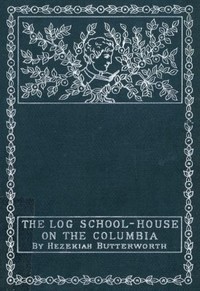
The Log School-House on the Columbia — A Reader’s Guide
(0 User reviews)
122
Project Gutenberg
2005
Not confirmed
Indians of North America -- Fiction; Children -- Conduct of life -- Fiction; Frontier and pioneer life -- Oregon -- Fiction; Northwest boundary of the United States -- Fiction; Conduct of life -- Fiction; Voyages and travels -- Fiction; Mountains -- Fiction; Natural history -- Fiction; Oregon Territory -- History -- Fiction
Readers of public-domain and historical texts
Project Gutenberg digital edition
en
Edition facts
Words
49,605
Reading time
216 min
Text sections
6
This digital edition of The Log School-House on the Columbia — A Reader’s Guide is described by source-level measurements including 49,605 words, 3 hr 36 min estimated reading time, and 6 detected text sections.
The text analysis averages about 15.4 words per sentence, while the detected sections provide another way to judge how the source is divided.
Project Gutenberg metadata also associates the work with “Indians of North America -- Fiction,” connecting these edition facts with the source record’s subject description.
Source:
Project Gutenberg record #14881
Butterworth's 1890 frontier novel blends a log-school setting with Indian legend, using Gretchen's violin and the Potlatch feast to explore cultural encounter. The narrative shifts between pastoral interludes and tense negotiations, with a measured, descriptive voice that mirrors the Columbia River's flow.
Read the complete public-domain text at its original source.
Read on Project GutenbergThe narrative voice in The Log School-House on the Columbia moves with a deliberate, almost ceremonial cadence, especially in scenes of Indian council and domestic life. Butterworth often slows the pace to dwell on natural description—mountains, rivers, and the “whispering tree”—before accelerating into moments of dramatic encounter, such as the threatened Potlatch feast. This rhythm gives the prose a measured, oral quality, as if the story were being told around a campfire.
Gretchen’s violin functions as a recurring motif that signals shifts in tone: it is described as “speaking” at the Potlatch, and its withheld music creates suspense. The author’s voice is consistently sympathetic to the Indian characters, rendering their speech in a stylized, poetic dialect (“You resemble a friend of mine, / A friend I would have in my heart— / Here, here, here”). This choice shapes the reader’s perception of cross-cultural exchange without resorting to overt editorializing.
Pacing Through Natural Description
Butterworth frequently interrupts action with extended passages of landscape and wildlife observation. In the excerpts, the narrative pauses to describe “the stars come out and were mirrored in the Columbia” or the “withered crone” cooking fish. These digressions slow the plot but deepen the sense of place. The author’s voice here is patient, almost ethnographic, cataloging details like the “song for the reception of strangers” and the gesture of striking the breast. This technique creates a rhythm where tension builds and then dissipates into stillness, mirroring the river’s flow. Readers should note how these descriptive interludes often precede moments of conflict, such as Mrs. Woods’s nervous visit or the chief’s prophecy of his own death.
Dialogue as a Marker of Voice
The dialogue in the excerpts reveals distinct registers. The schoolmaster speaks in moral aphorisms: “A chief should conquer himself first; obey the will of the Great Manitou.” The Indian chief replies with figurative language (“I live in peace—like yonder river”), while Benjamin offers blunt critique: “White man do not so. He cheat—he kill.” Butterworth does not homogenize speech; each character’s voice reflects their role and perspective. The chief’s farewell—“I go away when the swallows go”—is poetic and resigned, while Mrs. Woods’s “nervous motions” are described rather than voiced. This variation in dialogue style reinforces the cultural tensions at the heart of the story, without the narrator explicitly judging either side.
Recurring Motifs and Structural Repetition
Several motifs recur across the excerpts, creating a cohesive texture. The violin is mentioned repeatedly as an object of curiosity and a promised voice at the Potlatch. The “whispering tree” appears as a site for dances and feasts. The phrase “Boston tilicum” (white friend) is used by the chief, linking the schoolmaster to a broader category of outsiders. Butterworth also repeats the gesture of striking the heart during the reception song, which reinforces the theme of emotional sincerity. These repetitions give the narrative a folkloric quality, as if certain images and phrases are meant to be remembered. They also signal shifts in pace: the violin’s silence builds anticipation, while the song’s repetition slows the scene into ritual.
Readers attentive to narrative voice will notice how Butterworth’s prose oscillates between documentary precision and lyrical reflection. The log school-house itself is less a setting than a symbol of the encounter between cultures. Pay attention to how the author uses the chief’s speeches and Gretchen’s perspective to mediate between the pioneer and Indian worlds, and how the pacing of each chapter—alternating between quiet observation and sudden confrontation—shapes the story’s emotional arc.
Something about that measured voice, how it lets the river set the pace, stays with me long after the Potlatch fades. Gretchen’s violin feels like a quiet hand reaching across a divide. I keep thinking of that same hand, slightly colder, in The Land of Frozen Suns: A Novel — Inside the Classic, where the longing is frostier but just as human. Odd, how certain books whisper to each other.
There are no reviews for this eBook.
There are no comments for this eBook.
Reader reflection
Before you leave, reflect on the book
Use these questions to collect your thoughts before moving on.
Your progress
0
/
10
2
Did this book hold your interest?
3
Would you encourage someone else to read it?
4
How demanding did the text feel?
5
Would this book work well in a reading group?
6
How strongly did the book affect you emotionally?
7
Do you expect to return to this book?
8
Did anything about the book feel genuinely new?
9
What is the main idea you are taking away?
10