1

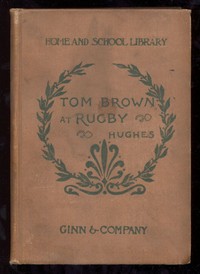
Tom Brown at Rugby — A Closer Reading
(0 User reviews)
1666
Project Gutenberg
2010
Not confirmed
Schools -- Fiction; England -- Fiction; Bildungsromans; Boys -- Fiction; Rugby School -- Fiction; Endowed public schools (Great Britain) -- Fiction
Readers of public-domain and historical texts
Project Gutenberg digital edition
en
Edition facts
Words
121,014
Reading time
527 min
Text sections
19
Before opening Tom Brown at Rugby — A Closer Reading, the edition data offers a quick orientation: 121,014 words, 8 hr 47 min estimated reading time, and 19 detected text sections.
The text analysis averages about 21.9 words per sentence, while the detected sections provide another way to judge how the source is divided.
Project Gutenberg metadata also associates the work with “Schools -- Fiction,” connecting these edition facts with the source record’s subject description.
Source:
Project Gutenberg record #33777
This editorial note examines the structure and recurring images in Thomas Hughes's Tom Brown at Rugby, focusing on movement between school scenes, rule-breaking as adventure, and the moral earnestness of Dr. Arnold's Rugby.
Read the complete public-domain text at its original source.
Read on Project GutenbergThomas Hughes's Tom Brown at Rugby moves through a series of tightly framed school episodes, each pivoting on a contest of wills—between boys, between rules and rebellion, and between physical force and moral resolve. The narrative rhythm alternates between collective rituals (football matches, lotteries, suppers) and private confrontations (flashman's bullying, Diggs's blow, Tom's promise to Morgan). This editorial note traces three structural patterns: the staging of rule-breaking as a form of adventure, the recurrence of physical objects (bats, cricket balls, study pictures) as markers of loyalty, and the way Hughes uses the school's architecture—passages, Hall, studies—to map social hierarchy.
Rule-Breaking as Adventure
Hughes frames the boys' infractions not as delinquency but as a species of sport. The narrator observes that Tom and East, after losing their 'character for steadiness,' began 'doing things which were forbidden, as a matter of adventure'—comparing their motives to those of smugglers. The rule against fags being in the Hall after supper becomes a 'daily pleasure' to break, and the threat of a præpostor's visit is likened to 'the shadow of a hawk over a chicken-yard.' This language transforms school discipline into a game of evasion, where the thrill lies in the chase rather than the transgression itself. The pattern recurs: Flashman's brutality is met with a blow that is not returned, and Tom's silence about the roasting incident earns him gratitude but also a promise he fails to keep. Each episode reinforces a code where physical courage and loyalty outweigh obedience.
Objects as Social Currency
Throughout the excerpts, material goods carry symbolic weight. Tom wins 'thirty shillings' in the lottery and, with East, spends it on 'pictures for their study, two new bats and a cricket-ball, all the best that could be got, and a supper of sausages, kidneys, and beef-steak pies to all the rebels.' The items are not mere purchases; they cement alliances and mark the boys as part of a faction. The study itself becomes a contested space—its decoration a badge of identity. Earlier, the lottery ticket is a token of risk and reward. Hughes uses these objects to externalize internal conflicts: a new bat stands for solidarity, a picture for taste, a shared meal for truce. The narrator's aside—'Light come, light go; they wouldn't have been comfortable with money in their pockets'—underscores how possessions in this world are meant to be spent in the service of friendship or rebellion.
Architecture of Hierarchy
The school's physical layout mirrors its social order. The 'Hall' and 'passages' are liminal zones where fags risk punishment; the 'fifth-form room' is where sixth-formers gather, and the 'library' is a space of shared learning. Hughes maps power through movement: a præpostor's 'tour of the passages and Hall, and the fags' studies' is an act of surveillance, while the boys' nightly 'stole out into the Hall' is a territorial claim. The description of a raid—'the first kick at the door and ominous "Open here"'—turns a study into a fortress under siege, with boys diving 'under the sofa, another under the table.' This choreography of hiding and discovery recurs, most notably when Tom is 'roasted' and later returns to find 'matters much changed for the better.' The school is a stage where every doorway and corridor can become a scene of confrontation or escape.
Moral Earnestness and Its Limits
The editor's introduction emphasizes Dr. Arnold's success in developing 'honest, steadfast, and manly' character, and the narrative does reflect a moral framework—Tom's promise to Morgan, his refusal to inform on the roasters, the condemnation of Flashman's cowardice. Yet the excerpts also reveal a gap between stated ideals and actual behavior. The boys break rules 'as a matter of adventure,' and the narrator admits they 'never occurred to them to consider why such and such rules were laid down.' The moral earnestness is filtered through a lens of pragmatism: Tom keeps Harkaway 'all to himself' and spends his winnings on pleasure. Hughes does not preach; he shows boys acting according to a code that values pluck over principle. The result is a portrait of school life where virtue is tested not in sermons but in the scrum of daily choices—whether to strike back, to confess, or to share a pie.
Readers attentive to structure will notice how Hughes builds each chapter around a single, contained incident—the lottery, the fight, the fever—and then moves briskly to the next. The book rewards those who watch for recurring props (bats, pictures, suppers) and the shifting geography of the school. The editor's cuts, noted in the introduction, may affect continuity; the original text is longer. Approach this edition as a curated selection of episodes, each a vignette of boyhood ethics in action.
Reading about Tom’s rule-breaking as something tender reminded me of old school friendships—those quiet rebellions that felt like freedom. There’s a similar warmth in The King of Arcadia — Themes and Context, where earnestness lingers like morning light on a chapel wall. I keep thinking how little we change, only the fields do.
There are no reviews for this eBook.
There are no comments for this eBook.
Reader reflection
How did this book work for you?
Your answers remain private and are stored only in this browser.
Your progress
0
/
10
2
What was your overall reaction to the book?
3
Is this a title you would suggest to others?
4
Did the language feel accessible?
5
Was the book easy to understand?
6
What did you think about the pace?
7
How distinctive were its ideas or approach?
8
What was its emotional impact?
9
Which lesson or insight stayed with you?
10