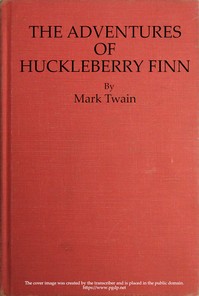
The Adventures of Huckleberry Finn (Tom Sawyer's Comrade) — Text and Context
Edition facts
The source record for The Adventures of Huckleberry Finn (Tom Sawyer's Comrade) — Text and Context measures this digital text at 120,195 words, 8 hr 43 min estimated reading time, and 10 detected text sections.
The text analysis averages about 20.2 words per sentence, while the detected sections provide another way to judge how the source is divided.
Project Gutenberg metadata also associates the work with “Humorous stories,” connecting these edition facts with the source record’s subject description.
Calculated from edition completeness, EPUB availability, text structure and catalogue metadata. Not a user rating.
How this score is calculated
- Description quality20 pts
- Title & short description10 pts
- Source metadata20 pts
- Text length15 pts
- Chapters / structure15 pts
- EPUB file integrity20 pts
Total of 100 points, scaled to a 2.5-5.0 range. Editions with an empty description or a missing EPUB file are not scored.
Read the Text
going, so I made up my mind I wouldn’t try for it. But I never said so, because it would only make trouble, and wouldn’t do no good.
Now she had got a start, and she went on and told me all about the good place. She said all a body would have to do there was to go around all day long with a harp and sing, forever and ever. So I didn’t think much of it. But I never said so. I asked her if she reckoned Tom Sawyer would go there, and she said not by a considerable sight. I was glad about that, because I wanted him and me to be together.
Miss Watson she kept pecking at me, and it got tiresome and lonesome. By and by they fetched the niggers in and had prayers, and then everybody was off to bed. I went up to my room with a piece of candle, and put it on the table. Then I set down in a chair by the window and tried to think of something cheerful, but it warn’t no use. I felt so lonesome I most wished I was dead. The stars were shining, and the leaves rustled in the woods ever so mournful; and I heard an owl, away off, who-whooing about somebody that was dead, and a whippowill and a dog crying about somebody that was going to die; and the wind was trying to whisper something to me, and I couldn’t make out what it was, and so it made the cold shivers run over me. Then away out in the woods I heard that kind of a sound that a ghost makes when it wants to tell about something that’s on its mind and can’t make itself understood, and so can’t rest easy in its grave, and has to go about that way every night grieving. I got so downhearted and scared I did wish I had some company. Pretty soon a spider went crawling up my shoulder, and I flipped it off and it lit in the candle; and before I could budge it was all shriveled up. I didn’t need anybody to tell me that that was an awful bad sign and would fetch me some bad luck, so I was scared and most shook the clothes off of me. I got up and turned around in my tracks three times and crossed my breast every time; and then I tied up a little lock of my hair with a thread to keep witches away. But I hadn’t no confidence. You do that when you’ve lost a horseshoe that you’ve found, instead of nailing it up over the door, but I hadn’t ever heard anybody say it was any way to keep off bad luck when you’d killed a spider.
I set down again, a-shaking all over, and got out my pipe for a smoke; for the house was all as still as death now, and so the widow wouldn’t know. Well, after a long time I heard the clock away off in the town go boom—boom—boom—twelve licks; and all still again—stiller than ever. Pretty soon I heard a twig snap down in the dark amongst the trees—something was a-stirring. I set still and listened. Directly I could just barely hear a “_me-yow! me-yow!_” down there. That was good! Says I, “_me-yow! me-yow!_” as soft as I could, and then I put out the light and scrambled out of the window on to the shed. Then I slipped down to the ground and crawled in among the trees, and, sure enough, there was Tom Sawyer waiting for me.
We went tiptoeing along a path amongst the trees back toward the end of the widow’s garden, stooping down so as the branches wouldn’t scrape our heads. When we was passing by the kitchen I fell over a root and made a noise. We scrouched down and laid still. Miss Watson’s big nigger, named Jim, was setting in the kitchen door; we could see him pretty clear, because there was a light behind him. He got up and stretched his neck out about a minute, listening. Then he says:
He listened some more; then he came tiptoeing down and stood right between us; we could ’a’ touched him, nearly. Well, likely it was minutes and minutes that there warn’t a sound, and we all there so close together. There was a place on my ankle that got to itching, but I dasn’t scratch it; and then my ear begun to itch; and next my back, right between my shoulders. Seemed like I’d die if I couldn’t scratch. Well, I’ve noticed that thing plenty times since. If you are with the quality, or at a funeral, or trying to go to sleep when you ain’t sleepy—if you are anywheres where it won’t do for you to scratch, why you will itch all over in upward of a thousand places. Pretty soon Jim says:
“Say, who is you? Whar is you? Dog my cats ef I didn’ hear sumf’n. Well, I know what I’s gwyne to do: I’s gwyne to set down here and listen tell I hears it ag’in.”
So he set down on the ground betwixt me and Tom. He leaned his back up against a tree, and stretched his legs out till one of them most touched one of mine. My nose begun to itch. It itched till the tears come into my eyes. But I dasn’t scratch. Then it begun to itch on the inside. Next I got to itching underneath. I didn’t know how I was going to set still. This miserableness went on as much as six or seven minutes; but it seemed a sight longer than that. I was itching in eleven different places now. I reckoned I couldn’t stand it more’n a minute longer, but I set my teeth hard and got ready to try. Just then Jim begun to breathe heavy; next he begun to snore—and then I was pretty soon comfortable again.
Tom he made a sign to me—kind of a little noise with his mouth—and we went creeping away on our hands and knees. When we was ten foot off Tom whispered to me, and wanted to tie Jim to the tree for fun. But I said no; he might wake and make a disturbance, and then they’d find out I warn’t in. Then Tom said he hadn’t got candles enough, and he would slip in the kitchen and get some more. I didn’t want him to try. I said Jim might wake up and come. But Tom wanted to resk it; so we slid in there and got three candles, and Tom laid five cents on the table for pay. Then we got out, and I was in a sweat to get away; but nothing would do Tom but he must crawl to where Jim was, on his hands and knees, and play something on him. I waited, and it seemed a good while, everything was so still and lonesome.
As soon as Tom was back we cut along the path, around the garden fence, and by and by fetched up on the steep top of the hill the other side of the house. Tom said he slipped Jim’s hat off of his head and hung it on a limb right over him, and Jim stirred a little, but he didn’t wake. Afterward Jim said the witches bewitched him and put him in a trance, and rode him all over the state, and then set him under the trees again, and hung his hat on a limb to show who done it. And next time Jim told it he said they rode him down to New Orleans; and, after that, every time he told it he spread it more and more, till by and by he said they rode him all over the world, and tired him most to death, and his back was all over saddle-boils. Jim was monstrous proud about it, and he got so he wouldn’t hardly notice the other niggers. Niggers would come miles to hear Jim tell about it, and he was more looked up to than any nigger in that country. Strange niggers would stand with their mouths open and look him all over, same as if he was a wonder. Niggers is always talking about witches in the dark by the kitchen fire; but whenever one was talking and letting on to know all about such things, Jim would happen in and say, “Hm! What you know ’bout witches?” and that nigger was corked up and had to take a back seat. Jim always kept that five-center piece round his neck with a string, and said it was a charm the devil give to him with his own hands, and told him he could cure anybody with it and fetch witches whenever he wanted to just by saying something to it; but he never told what it was he said to it. Niggers would come from all around there and give Jim anything they had, just for a sight of that five-center piece; but they wouldn’t touch it, because the devil had had his hands on it. Jim was most ruined for a servant, because he got stuck up on account of having seen the devil and been rode by witches.
Well, when Tom and me got to the edge of the hilltop we looked away down into the village and could see three or four lights twinkling, where there was sick folks, maybe; and the stars over us was sparkling ever so fine; and down by the village was the river, a whole mile broad, and awful still and grand. We went down the hill and found Joe Harper and Ben Rogers, and two or three more of the boys, hid in the old tanyard. So we unhitched a skiff and pulled down the river two mile and a half, to the big scar on the hillside, and went ashore.
We went to a clump of bushes, and Tom made everybody swear to keep the secret, and then showed them a hole in the hill, right in the thickest part of the bushes. Then we lit the candles, and crawled in on our hands and knees. We went about two hundred yards, and then the cave opened up. Tom poked about amongst the passages, and pretty soon ducked under a wall where you wouldn’t ’a’ noticed that there was a hole. We went along a narrow place and got into a kind of room, all damp and sweaty and cold, and there we stopped. Tom says:
“Now, we’ll start this band of robbers and call it Tom Sawyer’s Gang. Everybody that wants to join has got to take an oath, and write his name in blood.”
Everybody was willing. So Tom got out a sheet of paper that he had wrote the oath on, and read it. It swore every boy to stick to the band, and never tell any of the secrets; and if anybody done anything to any boy in the band, whichever boy was ordered to kill that person and his family must do it, and he mustn’t eat and he mustn’t sleep till he had killed them and hacked a cross in their breasts, which was the sign of the band. And nobody that didn’t belong to the band could use that mark, and if he did he must be sued; and if he done it again he must be killed. And if anybody that belonged to the band told the secrets, he must have his throat cut, and then have his carcass burnt up and the ashes scattered all around, and his name blotted off the list with blood and never mentioned again by the gang, but have a curse put on it and be forgot forever.
Everybody said it was a real beautiful oath, and asked Tom if he got it out of his own head. He said some of it, but the rest was out of pirate-books and robber-books, and every gang that was high-toned had it.
Some thought it would be good to kill the _families_ of boys that told the secrets. Tom said it was a good idea, so he took a pencil and wrote it in. Then Ben Rogers says:
“Here’s Huck Finn, he hain’t got no family; what you going to do ’bout him?”
“Well, hain’t he got a father?” says Tom Sawyer.
“Yes, he’s got a father, but you can’t never find him these days. He used to lay drunk with the hogs in the tanyard, but he hain’t been seen in these parts for a year or more.”
They talked it over, and they was going to rule me out, because they said every boy must have a family or somebody to kill, or else it wouldn’t be fair and square for the others. Well, nobody could think of anything to do—everybody was stumped, and set still. I was most ready to cry; but all at once I thought of a way, and so I offered them Miss Watson—they could kill her. Everybody said:
“Oh, she’ll do. That’s all right. Huck can come in.”
Then they all stuck a pin in their fingers to get blood to sign with, and I made my mark on the paper.
“Now,” says Ben Rogers, “what’s the line of business of this Gang?”
“Nothing only robbery and murder,” Tom said.
“But who are we going to rob?—houses, or cattle, or—”
“Stuff! stealing cattle and such things ain’t robbery; it’s burglary,” says Tom Sawyer. “We ain’t burglars. That ain’t no sort of style. We are highwaymen. We stop stages and carriages on the road, with masks on, and kill the people and take their watches and money.”
“Must we always kill the people?”
“Oh, certainly. It’s best. Some authorities think different, but mostly it’s considered best to kill them—except some that you bring to the cave here, and keep them till they’re ransomed.”
“Ransomed? What’s that?”
“I don’t know. But that’s what they do. I’ve seen it in books; and so of course that’s what we’ve got to do.”
“But how can we do it if we don’t know what it is?”
“Why, blame it all, we’ve _got_ to do it. Don’t I tell you it’s in the books? Do you want to go to doing different from what’s in the books, and get things all muddled up?”
“Oh, that’s all very fine to _say_, Tom Sawyer, but how in the nation are these fellows going to be ransomed if we don’t know how to do it to them?—that’s the thing _I_ want to get at. Now, what do you _reckon_ it is?”
“Well, I don’t know. But per’aps if we keep them till they’re ransomed, it means that we keep them till they’re dead.”
“Now, that’s something _like._ That’ll answer. Why couldn’t you said that before? We’ll keep them till they’re ransomed to death; and a bothersome lot they’ll be, too—eating up everything, and always trying to get loose.”
“How you talk, Ben Rogers. How can they get loose when there’s a guard over them, ready to shoot them down if they move a peg?”
“A guard! Well, that _is_ good. So somebody’s got to set up all night and never get any sleep, just so as to watch them. I think that’s foolishness. Why can’t a body take a club and ransom them as soon as they get here?”
“Because it ain’t in the books so—that’s why. Now, Ben Rogers, do you want to do things regular, or don’t you?—that’s the idea. Don’t you reckon that the people that made the books knows what’s the correct thing to do? Do you reckon _you_ can learn ’em anything? Not by a good deal. No, sir, we’ll just go on and ransom them in the regular way.”
“All right. I don’t mind; but I say it’s a fool way, anyhow. Say, do we kill the women, too?”
“Well, Ben Rogers, if I was as ignorant as you I wouldn’t let on. Kill the women? No; nobody ever saw anything in the books like that. You fetch them to the cave, and you’re always as polite as pie to them; and by and by they fall in love with you, and never want to go home any more.”
“Well, if that’s the way I’m agreed, but I don’t take no stock in it. Mighty soon we’ll have the cave so cluttered up with women, and fellows waiting to be ransomed, that there won’t be no place for the robbers. But go ahead, I ain’t got nothing to say.”
Little Tommy Barnes was asleep now, and when they waked him up he was scared, and cried, and said he wanted to go home to his ma, and didn’t want to be a robber any more.
So they all made fun of him, and called him cry-baby, and that made him mad, and he said he would go straight and tell all the secrets. But Tom give him five cents to keep quiet, and said we would all go home and meet next week, and rob somebody and kill some people.
Ben Rogers said he couldn’t get out much, only Sundays, and so he wanted to begin next Sunday; but all the boys said it would be wicked to do it on Sunday, and that settled the thing. They agreed to get together and fix a day as soon as they could, and then we elected Tom Sawyer first captain and Joe Harper second captain of the Gang, and so started home.
I clumb up the shed and crept into my window just before day was breaking. My new clothes was all greased up and clayey, and I was dog-tired.
Well, I got a good going-over in the morning from old Miss Watson on account of my clothes; but the widow she didn’t scold, but only cleaned off the grease and clay, and looked so sorry that I thought I would behave awhile if I could. Then Miss Watson she took me in the closet and prayed, but nothing come of it. She told me to pray every day, and whatever I asked for I would get it. But it warn’t so. I tried it. Once I got a fish-line, but no hooks. It warn’t any good to me without hooks. I tried for the hooks three or four times, but somehow I couldn’t make it work. By and by, one day, I asked Miss Watson to try for me, but she said I was a fool. She never told me why, and I couldn’t make it out no way.
The narrative voice of Huckleberry Finn is established immediately through its vernacular cadence and wry self-awareness. Huck's opening remark about the previous book—"You don't know about me without you have read a book by the name of The Adventures of Tom Sawyer"—signals a direct, colloquial address that persists throughout. The text's structure is episodic, moving from the Widow Douglas's civilizing attempts to Pap's violent return, then to the river journey. Twain uses the Mississippi as both setting and symbol: the raft offers a floating refuge, while shore episodes repeatedly expose cruelty and absurdity. The excerpt of the circus scene illustrates Twain's method of layering spectacle with Huck's anxious observation, contrasting the crowd's delight with his own unease.
Episodic Movement and the River as Stage
The novel's structure is built around a series of discrete episodes, each introduced by a shift in location or circumstance. The table of contents—with chapter titles like "I Fool Pap and Get Away," "The House of Death Floats By," and "The Grangerfords Take Me In"—reveals a pattern of departure, encounter, and escape. The river functions as a connective thread: Huck and Jim's raft journeys are punctuated by landings that introduce new characters and conflicts. This episodic design allows Twain to juxtapose varied social milieus—from the feuding Grangerfords to the fraudulent Duke and Dauphin—without a single overarching plot. The movement between river and shore creates a rhythm of freedom and constraint, with the raft representing a temporary sanctuary that is repeatedly disrupted.
Recurring Images: The Raft, the Fog, and the Dead
Several images recur with symbolic weight. The raft is described as a "little floating home," a space of relative equality where Huck and Jim share meals and stories. Fog appears as a disorienting force, most notably in the chapter where Huck and Jim are separated, leading to Huck's deception and subsequent guilt. The "house of death" that floats by—a derelict building containing a corpse—introduces mortality and the threat of violence. Twain also repeatedly invokes snake-skin as a token of bad luck, a folk belief that Jim insists upon. These images accumulate meaning through repetition: the river's currents, the changing weather, and the debris of human life all contribute to a landscape that is both literal and metaphorical.
Dialect and Voice: Huck's Vernacular Lens
Twain's use of dialect is not merely decorative; it shapes the reader's perception of events. Huck's narration is marked by grammatical nonstandard forms ("I warn't ever drunk in my life"), colloquial idioms, and a limited vocabulary that nonetheless conveys complex moral judgments. The circus episode, for instance, is filtered through Huck's awe and anxiety: he notes the "powerful fine sight" of the riders but remains "all of a tremble" for the apparent drunkard's safety. This gap between Huck's literal description and the reader's broader understanding creates irony. The voices of other characters—Jim's dignified speech, Pap's drunken rant, the Duke's theatrical flourishes—are differentiated by distinct rhythms and word choices, making the novel a polyphonic work that resists a single authoritative tone.
Movement Between Scenes: The Logic of Escape
The novel's transitions between scenes are often abrupt, driven by necessity or accident. Huck's decision to "light out" from the Widow's, his flight from Pap's cabin, and his repeated departures from dangerous situations follow a pattern of reactive movement. The raft journey itself is a series of escapes: from the feuding Shepherdsons and Grangerfords, from the Duke and Dauphin's schemes, and from the threat of Jim's recapture. Twain does not always explain these transitions in detail; instead, the narrative moves forward through Huck's immediate decisions. This structure mirrors the improvisational quality of life on the river, where plans are fragile and the next bend may bring either danger or respite. The final chapter's title, "Nothing More to Write," suggests that the logic of escape has run its course, at least for now.
Readers attentive to the novel's structure will notice how Twain balances the episodic with the cumulative: each shore adventure leaves a residue that affects Huck's moral growth. The recurring images of the river, the raft, and the fog create a cohesive symbolic system without becoming rigid allegory. Pay particular attention to the moments when Huck's narration undercuts the authority of adult figures—these are the hinges on which the novel's critique of society turns.
Sometimes, rereading about Huck and Jim drifting along the river, I think about how hard it is to find that kind of quiet companionship in real life. It made me recall a set of old reading notes on The Mission Of Mr. Eustace Greyne 1905 — Reading Notes, which felt like catching a glimpse of a familiar, unassuming sort of loneliness.
Charlotte Garcia
1 month agoAva Martinez
1 month agoMila Anderson
1 week agoElla Anderson
1 week ago-
Jennifer Lawrence - 2 weeks ago
The Adventures of Huckleberry Finn is a classic that offers a vivid portrayal of life along the river. The character development is strong, especially Huck's internal conflicts. However, the dialect can be challenging to read, and some parts feel slow. Still, it's an important piece of literature worth experiencing. -
Jasmine Mitchell - 1 week ago
Mark Twain's masterpiece is a thrilling journey down the Mississippi that captures the spirit of adventure and the complexities of friendship. Huck's moral growth and his bond with Jim are both heartwarming and thought-provoking. The humor and satire are timeless, making this a must-read for anyone who appreciates classic American literature. -
Diane Nancy Johnson - 1 week ago
While the book is considered a classic, I found the frequent use of racial slurs and the depiction of Jim to be offensive and dated. The plot meanders, and the ending feels abrupt. There are more nuanced and respectful works about freedom and friendship. I struggle to see its enduring value without contextualizing it heavily.
How did this book work for you?
Your answers remain private and are stored only in this browser.
Charlotte Williams
2 weeks ago