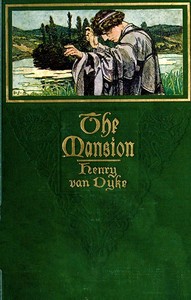
The Mansion — Text and Context

(4 User reviews)   717
Van Dyke, Henry, 1852-1933, Elliott, Elizabeth Shippen Green, 1871-1954 [Illustrator] Project Gutenberg 2011
Christmas stories; Christian life -- Fiction; Conduct of life -- Fiction; Christian fiction; Future life -- Fiction; Immortality -- Fiction Readers of public-domain and historical texts
Project Gutenberg digital edition en

Edition facts

Words 12,018
Reading time 53 min
Text sections 2

For The Mansion — Text and Context, the stored edition analysis reports 12,018 words, 53 min estimated reading time, and 2 detected text sections.

The text analysis averages about 19.2 words per sentence, while the detected sections provide another way to judge how the source is divided.

Project Gutenberg metadata also associates the work with “Christmas stories,” connecting these edition facts with the source record’s subject description.

Henry van Dyke's 1911 story traces a wealthy man's journey after death, where encounters with humble souls challenge his assumptions about worth. The narrative shifts from ornate descriptions of a mansion to stark, luminous prose on a heavenly moorland, using voice and pace to contrast earthly values with spiritual ones.
Share
Editorial Edition Score 4.5/5

Calculated from edition completeness, EPUB availability, text structure and catalogue metadata. Not a user rating.

How this score is calculated
  • Description quality20 pts
  • Title & short description10 pts
  • Source metadata20 pts
  • Text length15 pts
  • Chapters / structure15 pts
  • EPUB file integrity20 pts

Total of 100 points, scaled to a 2.5-5.0 range. Editions with an empty description or a missing EPUB file are not scored.

Edition quality

Read the Text

There was an air of calm and reserved opulence about the Weightman mansion that spoke not of money squandered, but of wealth prudently applied. Standing on a corner of the Avenue no longer fashionable for residence, it looked upon the swelling tide of business with an expression of complacency and half-disdain.

The house was not beautiful. There was nothing in its straight front of chocolate-colored stone, its heavy cornices, its broad, staring windows of plate glass, its carved and bronze-bedecked mahogany doors at the top of the wide stoop, to charm the eye or fascinate the imagination. But it was eminently respectable, and in its way imposing. It seemed to say that the glittering shops of the jewelers, the milliners, the confectioners, the florists, the picture-dealers, the furriers, the makers of rare and costly antiquities, retail traders in luxuries of life, were beneath the notice of a house that had its foundations in the high finance, and was built literally and figuratively in the shadow of St. Petronius' Church.

At the same time there was something self-pleased and congratulatory in the way in which the mansion held its own amid the changing neighborhood. It almost seemed to be lifted up a little, among the tall buildings near at hand, as if it felt the rising value of the land on which it stood.

John Weightman was like the house into which he had built himself thirty years ago, and in which his ideals and ambitions were incrusted. He was a self-made man. But in making himself he had chosen a highly esteemed pattern and worked according to the approved rules. There was nothing irregular, questionable, flamboyant about him. He was solid, correct, and justly successful.

His minor tastes, of course, had been carefully kept up to date. At the proper time, pictures by the Barbizon masters, old English plate and portraits, bronzes by Barye and marbles by Rodin, Persian carpets and Chinese porcelains, had been introduced to the mansion. It contained a Louis Quinze reception-room, an Empire drawing-room, a Jacobean dining-room, and various apartments dimly reminiscent of the styles of furniture affected by deceased monarchs. That the hallways were too short for the historic perspective did not make much difference. American decorative art is _capable de tout_, it absorbs all periods. Of each period Mr. Weightman wished to have something of the best. He understood its value, present as a certificate, and prospective as an investment.

It was only in the architecture of his town house that he remained conservative, immovable, one might almost say Early-Victorian-Christian. His country house at Dulwich-on-the-Sound was a palace of the Italian Renaissance. But in town he adhered to an architecture which had moral associations, the Nineteenth-Century-Brownstone epoch. It was a symbol of his social position, his religious doctrine, and even, in a way, of his business creed.

"A man of fixed principles," he would say, "should express them in the looks of his house. New York changes its domestic architecture too rapidly. It is like divorce. It is not dignified. I don't like it. Extravagance and fickleness are advertised in most of these new houses. I wish to be known for different qualities. Dignity and prudence are the things that people trust. Every one knows that I can afford to live in the house that suits me. It is a guarantee to the public. It inspires confidence. It helps my influence. There is a text in the Bible about 'a house that hath foundations.' That is the proper kind of a mansion for a solid man."

Harold Weightman had often listened to his father discoursing in this fashion on the fundamental principles of life, and always with a divided mind. He admired immensely his father's talents and the single-minded energy with which he improved them. But in the paternal philosophy there was something that disquieted and oppressed the young man, and made him gasp inwardly for fresh air and free action.

At times, during his college course and his years at the law school, he had yielded to this impulse and broken away--now toward extravagance and dissipation, and then, when the reaction came, toward a romantic devotion to work among the poor. He had felt his father's disapproval for both of these forms of imprudence; but it was never expressed in a harsh or violent way, always with a certain tolerant patience, such as one might show for the mistakes and vagaries of the very young. John Weightman was not hasty, impulsive, inconsiderate, even toward his own children. With them, as with the rest of the world, he felt that he had a reputation to maintain, a theory to vindicate. He could afford to give them time to see that he was absolutely right.

One of his favorite Scripture quotations was, "Wait on the Lord." He had applied it to real estate and to people, with profitable results.

But to human persons the sensation of being waited for is not always agreeable. Sometimes, especially with the young, it produces a vague restlessness, a dumb resentment, which is increased by the fact that one can hardly explain or justify it. Of this John Weightman was not conscious. It lay beyond his horizon. He did not take it into account in the plan of life which he made for himself and for his family as the sharers and inheritors of his success.

"Father plays us," said Harold, in a moment of irritation, to his mother, "like pieces in a game of chess."

"My dear," said that lady, whose faith in her husband was religious, "you ought not to speak so impatiently. At least he wins the game. He is one of the most respected men in New York. And he is very generous, too."

"I wish he would be more generous in letting us be ourselves," said the young man. "He always has something in view for us and expects to move us up to it."

"But isn't it always for our benefit?" replied his mother. "Look what a position we have. No one can say there is any taint on our money. There are no rumors about your father. He has kept the laws of God and of man. He has never made any mistakes."

Harold got up from his chair and poked the fire. Then he came back to the ample, well-gowned, firm-looking lady, and sat beside her on the sofa. He took her hand gently and looked at the two rings--a thin band of yellow gold, and a small solitaire diamond--which kept their place on her third finger in modest dignity, as if not shamed, but rather justified, by the splendor of the emerald which glittered beside them.

"Mother," he said, "you have a wonderful hand. And father made no mistake when he won you. But are you sure he has always been so inerrant?"

"Harold," she exclaimed, a little stiffly, "what do you mean? His life is an open book."

"Oh," he answered, "I don't mean anything bad, mother dear. I know the governor's life is an open book--a ledger, if you like, kept in the best bookkeeping hand, and always ready for inspection--every page correct, and showing a handsome balance. But isn't it a mistake not to allow us to make our own mistakes, to learn for ourselves, to live our own lives? Must we be always working for 'the balance,' in one thing or another? I want to be myself--to get outside of this everlasting, profitable 'plan'--to let myself go, and lose myself for a while at least--to do the things that I want to do, just because I want to do them."

"My boy," said his mother, anxiously, "you are not going to do anything wrong or foolish? You know the falsehood of that old proverb about wild oats."

He threw back his head and laughed. "Yes, mother," he answered, "I know it well enough. But in California, you know, the wild oats are one of the most valuable crops. They grow all over the hillsides and keep the cattle and the horses alive. But that wasn't what I meant--to sow wild oats. Say to pick wild flowers, if you like, or even to chase wild geese--to do something that seems good to me just for its own sake, not for the sake of wages of one kind or another. I feel like a hired man, in the service of this magnificent mansion--say in training for father's place as majordomo. I'd like to get out some way, to feel free--perhaps to do something for others."

The young man's voice hesitated a little. "Yes, it sounds like cant, I know, but sometimes I feel as if I'd like to do some good in the world, if father only wouldn't insist upon God's putting it into the ledger."

His mother moved uneasily, and a slight look of bewilderment came into her face.

"Isn't that almost irreverent?" she asked. "Surely the righteous must have their reward. And your father is good. See how much he gives to all the established charities, how many things he has founded. He's always thinking of others, and planning for them. And surely, for us, he does everything. How well he has planned this trip to Europe for me and the girls--the court-presentation at Berlin, the season on the Riviera, the visits in England with the Plumptons and the Halverstones. He says Lord Halverstone has the finest old house in Sussex, pure Elizabethan, and all the old customs are kept up, too--family prayers every morning for all the domestics. By-the-way, you know his son Bertie, I believe."

Harold smiled a little to himself as he answered: "Yes, I fished at Catalina Island last June with the Honorable Ethelbert; he's rather a decent chap, in spite of his ingrowing mind. But you?--mother, you are simply magnificent! You are father's masterpiece." The young man leaned over to kiss her, and went up to the Riding Club for his afternoon canter in the Park.

So it came to pass, early in December, that Mrs. Weightman and her two daughters sailed for Europe, on their serious pleasure trip, even as it had been written in the book of Providence; and John Weightman, who had made the entry, was left to pass the rest of the winter with his son and heir in the brownstone mansion.

They were comfortable enough. The machinery of the massive establishment ran as smoothly as a great electric dynamo. They were busy enough, too. John Weightman's plans and enterprises were complicated, though his principle of action was always simple--to get good value for every expenditure and effort. The banking-house of which he was the chief, the brain, the will, the absolutely controlling hand, was so admirably organized that the details of its direction took but little time. But the scores of other interests that radiated from it and were dependent upon it--or perhaps it would be more accurate to say, that contributed to its solidity and success--the many investments, industrial, political, benevolent, reformatory, ecclesiastical, that had made the name of Weightman well known and potent in city, church, and state, demanded much attention and careful steering, in order that each might produce the desired result. There were board meetings of corporations and hospitals, conferences in Wall Street and at Albany, consultations and committee meetings in the brownstone mansion.

For a share in all this business and its adjuncts John Weightman had his son in training in one of the famous law firms of the city; for he held that banking itself is a simple affair, the only real difficulties of finance are on its legal side. Meantime he wished the young man to meet and know the men with whom he would have to deal when he became a partner in the house. So a couple of dinners were given in the mansion during December, after which the father called the son's attention to the fact that over a hundred million dollars had sat around the board.

But on Christmas Eve father and son were dining together without guests, and their talk across the broad table, glittering with silver and cut glass, and softly lit by shaded candles, was intimate, though a little slow at times. The elder man was in rather a rare mood, more expansive and confidential than usual; and, when the coffee was brought in and they were left alone, he talked more freely of his personal plans and hopes than he had ever done before.

"I feel very grateful to-night," said he, at last; "it must be something in the air of Christmas that gives me this feeling of thankfulness for the many divine mercies that have been bestowed upon me. All the principles by which I have tried to guide my life have been justified. I have never made the value of this salted almond by anything that the courts would not uphold, at least in the long run, and yet--or wouldn't it be truer to say and therefore?--my affairs have been wonderfully prospered. There's a great deal in that text 'Honesty is the best'--but no, that's not from the Bible, after all, is it? Wait a moment; there is something of that kind, I know."

"May I light a cigar, father," said Harold, turning away to hide a smile, "while you are remembering the text?"

"Yes, certainly," answered the elder man, rather shortly; "you know I don't dislike the smell. But it is a wasteful, useless habit, and therefore I have never practised it. Nothing useless is worth while, that's my motto--nothing that does not bring the reward. Oh, now I recall the text, 'Verily I say unto you they have their reward.' I shall ask Doctor Snodgrass to preach a sermon on that verse some day."

"Using you as an illustration?"

"Well, not exactly that; but I could give him some good material from my own experience to prove the truth of Scripture. I can honestly say that there is not one of my charities that has not brought me in a good return, either in the increase of influence, the building up of credit, or the association with substantial people. Of course you have to be careful how you give, in order to secure the best results--no indiscriminate giving--no pennies in beggars' hats! It has been one of my principles always to use the same kind of judgment in charities that I use in my other affairs, and they have not disappointed me."

"Even the check that you put in the plate when you take the offertory up the aisle on Sunday morning?"

"Certainly; though there the influence is less direct; and I must confess that I have my doubts in regard to the collection for Foreign Missions. That always seems to me romantic and wasteful. You never hear from it in any definite way. They say the missionaries have done a good deal to open the way for trade; perhaps--but they have also gotten us into commercial and political difficulties. Yet I give to them--a little--it is a matter of conscience with me to identify myself with all the enterprises of the Church; it is the mainstay of social order and a prosperous civilization. But the best forms of benevolence are the well-established, organized ones here at home, where people can see them and know what they are doing."

"You mean the ones that have a local habitation and a name."

"Yes; they offer by far the safest return, though of course there is something gained by contributing to general funds. A public man can't afford to be without public spirit. But on the whole I prefer a building, or an endowment. There is a mutual advantage to a good name and a good institution in their connection in the public mind. It helps them both. Remember that, my boy. Of course at the beginning you will have to practise it in a small way; later, you will have larger opportunities. But try to put your gifts where they can be identified and do good all around. You'll see the wisdom of it in the long run."

"I can see it already, sir, and the way you describe it looks amazingly wise and prudent. In other words, we must cast our bread on the waters in large loaves, carried by sound ships marked with the owner's name, so that the return freight will be sure to come back to us."

The father laughed, but his eyes were frowning a little as if he suspected something irreverent under the respectful reply.

"You put it humorously, but there's sense in what you say. Why not? God rules the sea; but He expects us to follow the laws of navigation and commerce. Why not take good care of your bread, even when you give it away?"

"It's not for me to say why not--and yet I can think of cases--" The young man hesitated for a moment. His half-finished cigar had gone out. He rose and tossed it into the fire, in front of which he remained standing--a slender, eager, restless young figure, with a touch of hunger in the fine face, strangely like and unlike the father, at whom he looked with half-wistful curiosity.

"The fact is, sir," he continued, "there is such a case in my mind now, and it is a good deal on my heart, too. So I thought of speaking to you about it to-night. You remember Tom Rollins, the Junior who was so good to me when I entered college?"

The father nodded. He remembered very well indeed the annoying incidents of his son's first escapade, and how Rollins had stood by him and helped to avoid a public disgrace, and how a close friendship had grown between the two boys, so different in their fortunes.

"Yes," he said, "I remember him. He was a promising young man. Has he succeeded?"

"Not exactly--that is, not yet. His business has been going rather badly. He has a wife and little baby, you know. And now he has broken down,--something wrong with his lungs. The doctor says his only chance is a year or eighteen months in Colorado. I wish we could help him."

"How much would it cost?"

"Three or four thousand, perhaps, as a loan."

"Does the doctor say he will get well?"

"A fighting chance--the doctor says."

The face of the older man changed subtly. Not a line was altered, but it seemed to have a different substance, as if it were carved out of some firm, imperishable stuff.

"A fighting chance," he said, "may do for a speculation, but it is not a good investment. You owe something to young Rollins. Your grateful feeling does you credit. But don't overwork it. Send him three or four hundred, if you like. You'll never hear from it again, except in the letter of thanks. But for Heaven's sake don't be sentimental. Religion is not a matter of sentiment; it's a matter of principle."

The face of the younger man changed now. But instead of becoming fixed and graven, it seemed to melt into life by the heat of an inward fire. His nostrils quivered with quick breath, his lips were curled.

"Principle!" he said. "You mean principal--and interest too. Well, sir, you know best whether that is religion or not. But if it is, count me out, please. Tom saved me from going to the devil, six years ago; and I'll be damned if I don't help him to the best of my ability now."

John Weightman looked at his son steadily. "Harold," he said at last, "you know I dislike violent language, and it never has any influence with me. If I could honestly approve of this proposition of yours, I'd let you have the money; but I can't; it's extravagant and useless. But you have your Christmas check for a thousand dollars coming to you to-morrow. You can use it as you please. I never interfere with your private affairs."

"Thank you," said Harold. "Thank you very much! But there's another private affair. I want to get away from this life, this town, this house. It stifles me. You refused last summer when I asked you to let me go up to Grenfell's Mission on the Labrador. I could go now, at least as far as the Newfoundland Station. Have you changed your mind?"

"Not at all. I think it is an exceedingly foolish enterprise. It would interrupt the career that I have marked out for you."

"Well, then, here's a cheaper proposition. Algy Vanderhoof wants me to join him on his yacht with--well, with a little party--to cruise in the West Indies. Would you prefer that?"

"Certainly not! The Vanderhoof set is wild and godless--I do not wish to see you keeping company with fools who walk in the broad and easy way that leads to perdition."

The opening pages of The Mansion establish a deliberate, almost architectural prose rhythm. The narrator describes the Weightman mansion with a series of balanced clauses—'not of money squandered, but of wealth prudently applied'—that mirror the house's own 'air of calm and reserved opulence.' The language is dense with qualifying phrases, as if the building itself is a character whose solidity is both imposing and slightly absurd. Van Dyke piles up period styles—Louis Quinze, Empire, Jacobean—only to undercut them with the remark that 'American decorative art is capable de tout, it absorbs all periods.' This early voice is measured, ironic, and invested in surfaces.

From Ornament to Openness

The story's first half moves at a stately pace, lingering on the mansion's 'chocolate-colored stone' and 'broad, staring windows.' Sentences are long, layered with subordinate clauses that mimic the accumulation of wealth. But once John Weightman dies and finds himself on a 'wide heavenly moorland,' the prose shifts abruptly. The sky is 'tranquil, sunless,' the light 'diffused without a shadow.' Van Dyke strips away ornament: the heavenly landscape is described in short, plain phrases—'free air of perfect peace'—a stark contrast to the earlier catalog of possessions. This change in pace is not gradual; it is a deliberate break, signaling a new mode of perception.

Voices of the Unremarkable

On the road, Weightman meets a company of people whose lives are summarized in swift, unadorned sketches. A bookkeeper 'patient and narrow,' a Sister of Charity nursing cancer patients, a poet who brought 'cheer and comfort not only by his songs, but by his wise and patient works.' The narrator's voice here becomes almost reportorial, listing these figures without the earlier irony. The doctor's life is 'a plain, hard life, uneventfully spent for others'—the word 'uneventfully' is key, as the story now values what the world overlooks. Weightman's own 'adventures and triumphs' seem irrelevant; he 'did not care to speak much about it.' The shift in narrative voice—from evaluative to simple—mirrors the story's moral reorientation.

Repeated Details and the Weight of Objects

Throughout the earthly sections, objects carry weight: the mansion's 'bronze-bedecked mahogany doors,' the 'Barbizon masters,' the 'Persian carpets.' These are not just furnishings but markers of a worldview where value is measured by accumulation. In the heavenly section, objects vanish. The only repeated detail is the word 'mansion' itself, now stripped of materiality. The old doctor asks Weightman if he is 'looking forward to' his mansion, and the term becomes a placeholder for something else. Van Dyke uses this recurrence to underline the gap between earthly and heavenly meanings. The story does not explain what the heavenly mansion is; it simply lets the word resonate differently in the new context.

Readers should attend to how van Dyke handles the transition between worlds. The change in sentence length, vocabulary, and narrative distance is not accidental—it is the story's central technique. The earthly prose is dense with things; the heavenly prose is sparse with presence. Watching this shift happen on the page is more instructive than any explicit moral. The story earns its conclusion not through argument but through the gradual alteration of its own voice.

Reading van Dyke’s mansion gives way to that moorland, and I find myself thinking of other plain paths—like the one in How Private George W. Peck Put Down the Rebellion or, The Funny Experiences of a Raw Recruit - 1887 — Context and Discussion. Both stories shed their ornament for something truer. We carry so much; the lightest voices often remember us best. That’s all.

Noah Roberts
1 month ago

Dylan Lee
6 days ago

Harper Lee
1 month ago

Luke Perez
2 weeks ago

4.5
4.5 out of 5 (4 User reviews )

Add a Review

Your Rating *
  • ...
    David Watson - 4 weeks ago
    An absolutely gripping tale of mystery and intrigue. The Mansion weaves a rich narrative that keeps you guessing until the very end. The characters are well-developed and the atmosphere is both eerie and compelling. I couldn't put it down. Highly recommended for anyone who loves a good paranormal mystery with a touch of historical depth.

  • ...
    Jonathan Roy - 3 weeks ago
    The Mansion offers an intriguing plot with a solid mystery at its core. The descriptive writing creates a vivid setting that draws you in. However, the pacing at times felt uneven, with certain chapters dragging on. Still, if you enjoy slow-burn mysteries, this is a decent read.

  • ...
    Eric Martin - 2 weeks ago
    I wanted to like The Mansion, but the story fell flat for me. The premise was promising, but the execution lacked suspense and the plot twists were predictable. The characters were somewhat flat, and the ending felt rushed and unsatisfying. It feels like a missed opportunity for a truly chilling narrative.


Reader reflection

How did this book work for you?

Your answers remain private and are stored only in this browser.

Your progress 0 / 10
1

Where are you in your reading?

2

How did the book work for you overall?

3

Would you pass this book on to a friend?

4

How much effort did this book require?

Related eBooks